



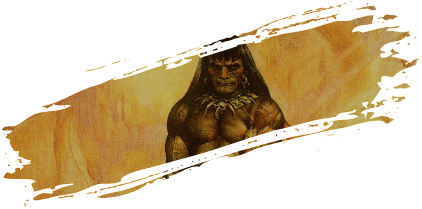
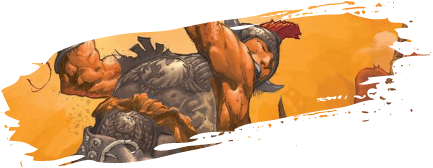


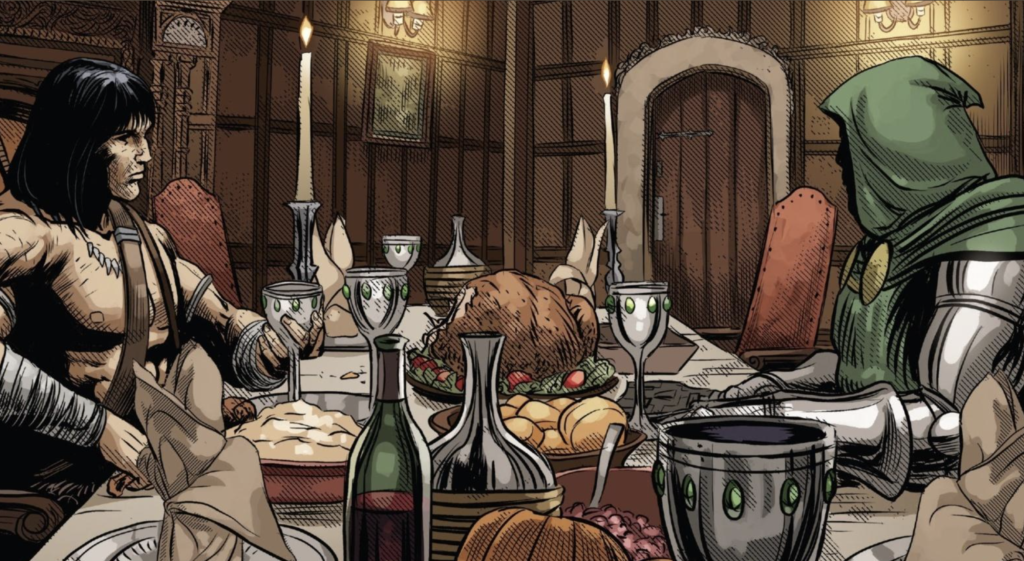
We all want arms like Conan the Barbarian. That much is universal. But nobody gets that big on vibes alone. Somewhere behind all the conquest and sorcery and general mayhem, the man was eating. A lot.
So what did he actually eat?
Robert E. Howard answered this question before anyone thought to ask it. In “The Hyborian Age,” his essay mapping the deep history of his world, Howard was explicit: the Cimmerians were the direct ancestors of the Gaels, like the Irish and the Highland Scots.
So, if we want to know what a Cimmerian feast looked like, we can look at what Iron Age Ireland and Scotland actually ate. And thanks to decades of modern archaeology, soil chemistry, bone isotope analysis, and chemical residues scraped from the insides of 2,500-year-old cooking pots, we know they ate a lot more than “meat and mead.”
What follows is our guide to building the most authentic barbarian meal you can actually pull off. Some of this you’ll find at your grocery store. Some of it you’ll need to track down at a specialty shop or a local meadery.
And one part of it involves heating rocks in a fire and throwing them into a hole full of water, but we’ll get to that.
The Meat
The centerpiece of your Conan feast would not be elk, venison, or wild boar seared over a campfire. Wild game is actually rare in the archaeological record of Iron Age Britain and Ireland. Data indicate that hunting was a marginal activity, probably more sport than sustenance.
The real star is pork. As in domesticated pigs.
At Navan Fort, a massive ceremonial center in Northern Ireland that was used as the legendary seat of the Ulaid from the 4th to the 1st century BCE, 63% of the excavated animal remains were pig. And these weren’t desperate, scavenged meals. At feasting sites like this one, the meat was so abundant that people didn’t even bother cracking the bones for marrow.
Pigs held a unique status. Unlike cattle (which gave milk, pulled ploughs, and represented wealth) or sheep (which gave wool), pigs produced nothing except meat. And, because pigs were fast-breeding, large-littered, quick to mature, and capable of foraging on their own in dense woodland, they were the perfect feast animal. You could slaughter enormous numbers of them for a ceremonial blowout without touching your dairy herd or your wool supply.
Beef was secondary. Cattle were too valuable alive to be used for things like milk, labor, and currency to slaughter casually. They were eaten at the end of their working lives. A beef cut at your feast is fine. But pork is the main event.
What would not be on the table, however, was fish.
In a comprehensive survey of 117 English Iron Age sites, over 90% contained zero fish remains. Coastal populations show purely terrestrial signatures in their bone chemistry, meaning they were not eating fish at all.
It wasn’t because they couldn’t. The technology existed. Earlier Mesolithic communities relied heavily on marine resources. Later Viking populations did too. But for the centuries in between, the Iron Age Celts and Gaels refused.
The leading explanation is a religious taboo. In Celtic cosmology, water was a volatile boundary between the mortal world and the realm of the gods. This is why they threw swords, shields, and human sacrifices into bogs and rivers as votive offerings. The creatures living in those waters were sacred, or ritually dangerous, or both. Thus, consuming them was a violation.
Regardless of what land animal was on the table, everyone wanted what was known in early Irish literature as the “champion’s portion”. This was the single best cut of pork at the table, and it was awarded exclusively to the greatest warrior present. People physically fought over it. If you’ve read a scene in Howard where a Cimmerian claims the best seat and the best food at a table full of hostile men, that custom has real roots.
So, if you want to eat like Conan, your grocery list starts with a bone-in pork roast.
The Drink
You can imbibe three types of drinks at this feast.
The first is ale, and no: we don’t mean tasted nothing like modern beer. Chemical analyses of Celtic vessels reveal that the types of ale they drank reassembled something closer to a malted barley beer flavored with pine resin, mint, and meadowsweet. It would be dark, slightly sour, and intensely herbal. This was brewed long before the widespread adoption of hops in Europe. If you want to approximate it, look for a craft gruit ale, which is a style brewed with botanical additives instead of hops. A few small breweries and historic brewing operations still produce them. It won’t be exact, but it’s closer than anything in the standard beer aisle.
The second is mead. Beeswax residues found alongside fermentation biomarkers in Celtic vessels confirm that honey-sweetened ales and meads were widespread across the Iron Age world. Mead is easier to source now than it’s ever been, so this shouldn’t be hard! But go dry or semi-sweet, as the Iron Age version almost certainly wasn’t the cloyingly sweet dessert mead you find at a renaissance faire.
The last drink you can have is wine but only if you’re the chieftain at the table. Celtic elites imported Mediterranean wine as a prestige commodity. Tartaric acid, the chemical fingerprint of grapes, has been identified in noble Celtic jugs suggesting that chieftains drank it because it proved they had the wealth and the reach to get it.
So, yes, you will be able to get a little buzz here.
The Table: Grain, Butter, and What You Foraged on the Way
The actual caloric engine of the Iron Age was grain. Specifically, barley.
Barley was the workhorse crop of the Gaelic world. Lower yields per acre than wheat, but more protein per grain. It was consumed as thick porridge, dense unleavened flatbread, and heavy potage.
To bake bread with barley (which has basically no gluten) Iron Age bakers mixed it with wheat flour to get enough structure. A modern approximation would be to combine barley flour with spelt or wheat flour, add water and salt, and bake it flat. Remember: the reason there’s no yeast is because you’re making a dense, chewy flatbread that can soak up stew.
Dairy was also a massive pillar of their diet. Residue analysis shows that an enormous proportion of Iron Age cooking pottery carried the chemical signatures of butter, cheese, yogurt, and curds. Because the adult ability to digest raw milk probably wasn’t universal in these populations, most dairy was processed into lower-lactose fermented forms like butter, hard cheese, and curds.
And then there’s bog butter. In Ireland and Scotland, people buried enormous slabs of butter deep in peat bogs, sometimes wrapped in animal bladders, bark, or carved wooden containers. The bogs were cold, oxygen-free, acidic, and naturally antimicrobial. A perfect prehistoric refrigerator for stockpiling energy-dense calories against winter or famine. You don’t need to go to a bog (unless you want to), so trust that a dish of good salted butter on the table carries the spirit.
Sides would appear meager but definitely help add body to the meal. Think things like hazelnuts scattered on the board, or wild apples or crabapples if you can find them These were foraged supplements that provided vitamins and flavor to break up what was otherwise a diet of grain, meat, and fat.
The Fire
The default picture of a barbarian feast involves a whole animal on a spit over a roaring open flame. It makes a great painting, but it’s not accurate at all.
The dominant cooking method of the Iron Age was simmering, stewing, and using wet-heat cooking in large, coarse, unglazed ceramic pots. Residue analysis of those vessels consistently finds plant waxes mixed in with heavy animal fats. The signature Iron Age meal was a one-pot stew consisting of things like chunks of pork or beef, barley or oats for body, and whatever greens were available, all slow-simmered into something thick and rich and filling.
But the truly spectacular cooking technology is the fulacht fiadh.
Nearly 6,000 of these sites have been recorded in Ireland alone. Here’s the method: dig a trough or pit into wet ground, low enough that groundwater fills it naturally. Build a large fire next to it. Heat stones in the fire until they’re screaming hot. Then grab them with long wooden tongs and drop them into the water.
The water boils almost immediately.
Experimental archaeologists have proven this method works beautifully for cooking large joints of meat wrapped in straw and submerged in the stone-heated water. The thermal shock shatters each stone after a single use; the spent fragments get shoveled out and piled around the pit, gradually building the crescent-shaped mound of blackened, fractured rock that identifies these sites thousands of years later.
The practical recommendation: make a stew. A big one. Pork shoulder, bone-in, braised low and slow with barley, root vegetables, and a handful of fresh herbs. Serve it alongside the flatbread, the butter, and the hazelnuts. Pour the mead.
That’s your Cimmerian feast, built from the same foodways practiced by the people Howard identified as Conan’s descendants.
Your Turn
We want to see it.
Follow Heroic Signatures on Instagram and share your attempt at the most authentic barbarian feast you can assemble.
Tag us when you show off your meal!
Whoever assembles the most authentic meal gets something from the hoard.

Lo Terry
In his effort to help Heroic Signatures tell legendary stories, Lo Terry does a lot. Sometimes, that means spearheading an innovative, AI-driven tavern adventure. In others it means writing words in the voice of a mischievous merchant for people to chuckle at. It's a fun time.