




Most people know Conan Exiles as a survival game. Build a base, fight some things, try not to die in a sandstorm.
What most people don’t know is that the guy who built it spent years combing through Robert E. Howard’s original texts to decide where every dungeon, faction, god, and creature belongs because there was just that much to try and fit into the game (all without overshadowing the naked brutality of what makes a qualtiy survival game).
With Conan Exiles Enhanced launching May 5th as a free Unreal Engine 5 upgrade for all existing owners on Steam, we sat down with Joel Bylos, the creative director behind the game, to talk about what he and his team actually built.
What came out of that conversation is worth your time whether you’ve logged three thousand hours or never touched the game.
Conan’s Greatest Hits: How the Exiled Lands Were Built
When Funcom set out to build Conan Exiles, the team faced an impossible compression problem. Robert E. Howard spent decades building a world that stretches from the frozen peaks of Asgard to the black jungles of the south, from Stygian tombs to the pirate havens of the Barachan Isles. The game had an eight-by-eight kilometer map to work with.
Bylos described the solution simply: do Conan’s greatest hits in a small map.
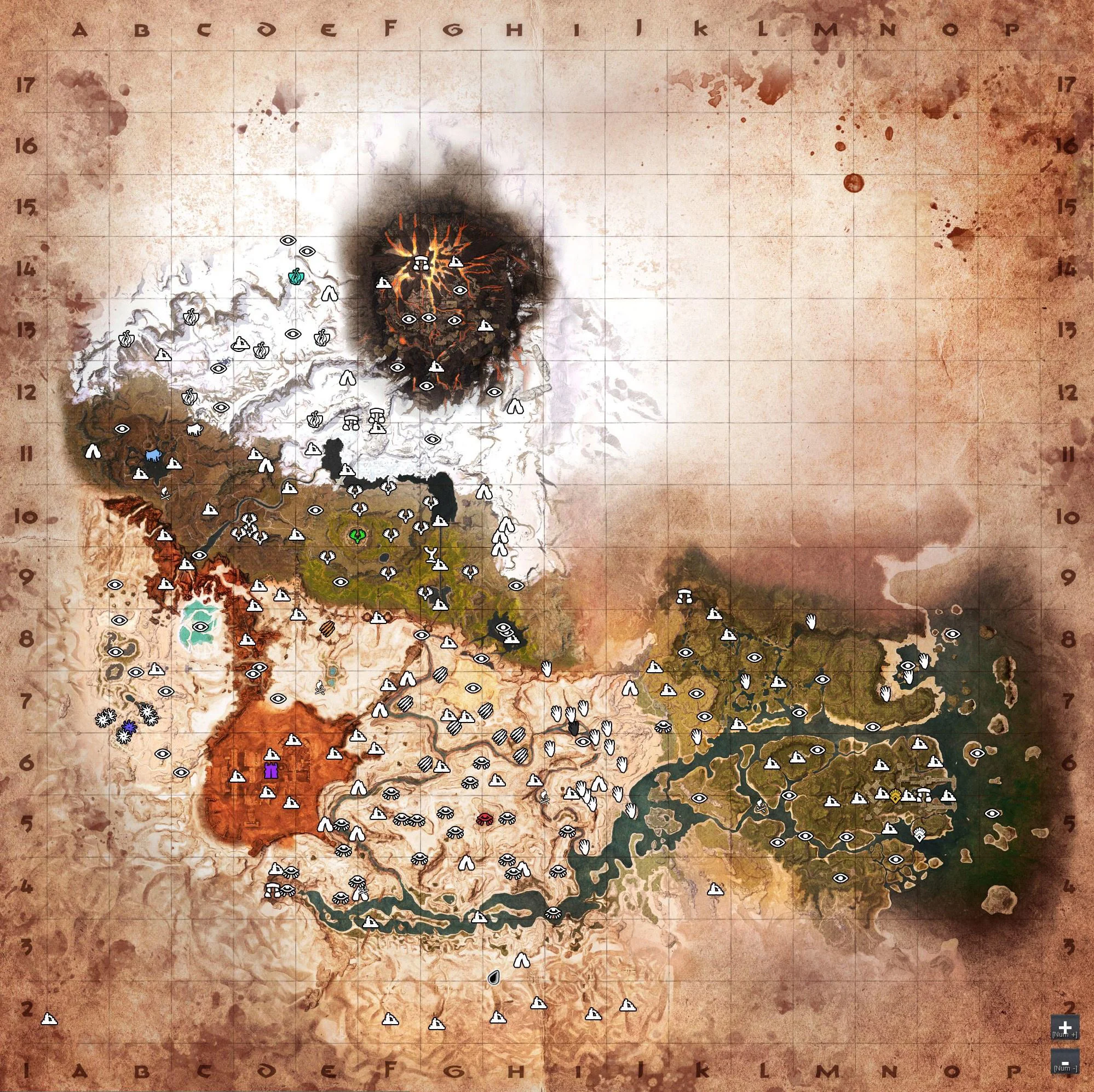
That phrase – “greatest hits” – is doing more work than it appears to. It didn’t mean cherry-picking the famous set pieces and scattering them across generic terrain. It meant reading Howard’s stories as landscape architecture. Bylos and his team went text by text, pulling the geography out of the prose.
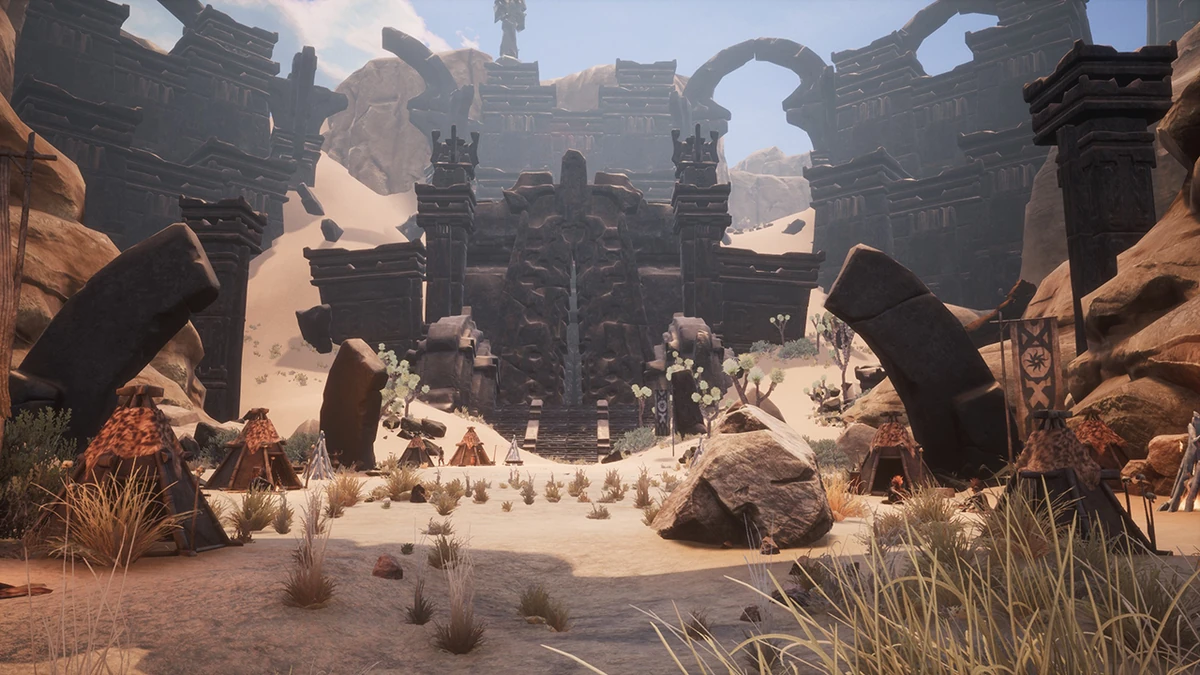
The desert that greets every new exile? That’s Xuthal of the Dusk: Howard’s vision of a lone city baking in an endless waste, full of lotus-drugged dreamers and something hungry underneath. The frozen north, where Aesir and Vanir factions clash in an uneasy alliance? The Frost Giant’s Daughter. The volcano where the last serpentmen incubate their eggs in year-round heat? That came from Kull-era lore about the reptilian races that predated mankind, with Bylos reasoning through what a cold-blooded civilization would actually need to survive.
There’s a wonderful honesty to how some of these decisions were made, too. The game launched in early access with the desert biome first (partly because Howard gave them plenty of material to work with there, but also because Unreal Engine 4 was terrible at rendering trees). The engine couldn’t handle dense foliage without tanking performance, so the team leaned into the arid south and expanded outward from there. Sometimes creative constraints and practical ones shake hands.
But the deeper you dig into the Exiled Lands, the stranger things get. Bylos layered the map with a buried history that most players will never fully uncover. Beneath the surface-level factions and biomes, two ancient civilizations – the Giant Kings and the Lemurians – fought a war so massive it shaped the actual geometry of the Exiled Lands. The ruins on the western half of the map are Giant King. The eastern ruins are Lemurian. The conflict between them literally carved the landscape players navigate, and the deeper you explore, the more those battle lines reveal themselves.
And then there’s the question the game never quite answers: what are the Exiled Lands, exactly? Bylos built in a deliberate ambiguity. Players who dig deep enough might start to wonder whether they’re exploring a real place at all. The game doesn’t resolve it. Howard may not have either.
Are the Exile Lands Real? Howard’s Ambiguity Meets Game Design
One of the sharpest things Robert E. Howard ever did as a worldbuilder was refuse to confirm whether the gods of the Hyborian Age are real.
Crom never answers prayers. That’s the point of Crom. Mitra may or may not speak to the queen in Black Colossus, as Howard immediately casts doubt on whether it was divine intervention or a priest’s trick. Set coils through Stygian religion as an article of cultural identity as much as genuine faith. The gods exist as forces that shape civilizations and justify violence, but whether they have any actual substance behind the altars is a question Howard left deliberately, productively open.
Conan Exiles had to make a choice. You can’t build a religion system around ambiguity. Players need mechanics like progression trees, crafting inputs, and tangible rewards. So Bylos and his team found a way to manifest the gods as their worshippers would imagine them, without ever collapsing Howard’s careful uncertainty.
The worship systems are brutal by design. Followers of Set harvest human hearts for sacrifice. Devotees of Mitra gather mystical essences from the people they kill. The game makes you participate in the transactional horror of the religions of the Hyborian Age and, in doing so, communicates the truth: these gods demand blood, and it doesn’t matter whether they’re listening.
The avatar designs tell their own stories, too. Mitra’s towering form was inspired by Ray Harryhausen’s bronze colossus in Jason and the Argonauts, as Bylos and his art director wanted something that felt ancient and imposing rather than classically divine. Set draws from the recurring imagery of serpentine coils in Hour of the Dragon. Derketo was the most interesting design challenge: she’s worshipped as a goddess of death in the Black Kingdoms and a goddess of orgies elsewhere, so the team leaned into that duality, building a deity whose visual identity carries both ecstasy and decay.
And then there’s Jhebbal Sag, god of beasts and the wild places, whose dungeon encounter might be the most genuinely Howardian moment in the entire game. You drink a potion, pass out, and wake up in an otherworldly realm where the laws of the Exiled Lands don’t apply. Bylos described it as an LSD trip, which isn’t far off. It captures that particular Howard register where sorcery stops being a plot device and starts feeling like something that could swallow you whole. The hut in the mountains of gloom. Your name on a sign. Something waiting.
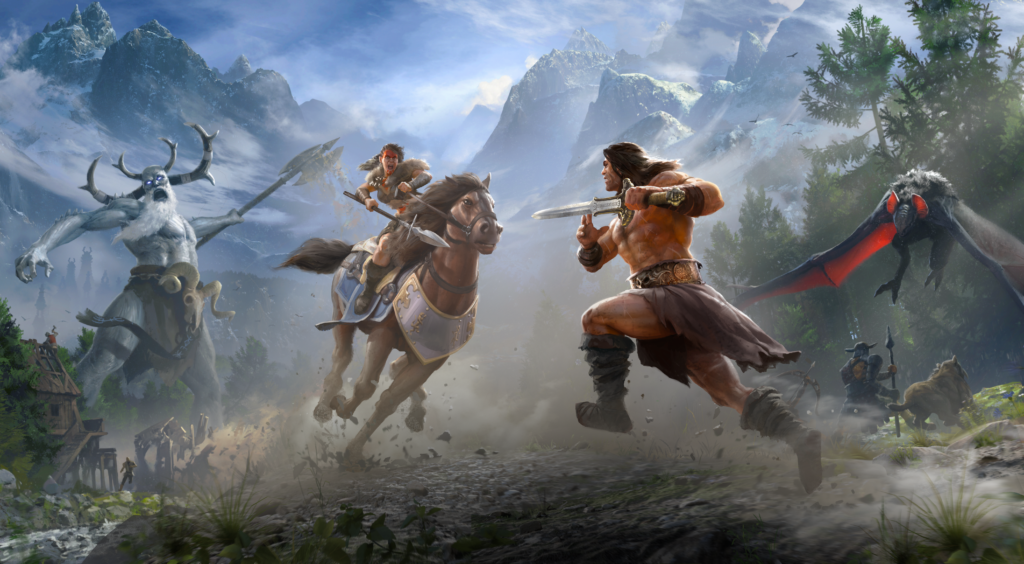
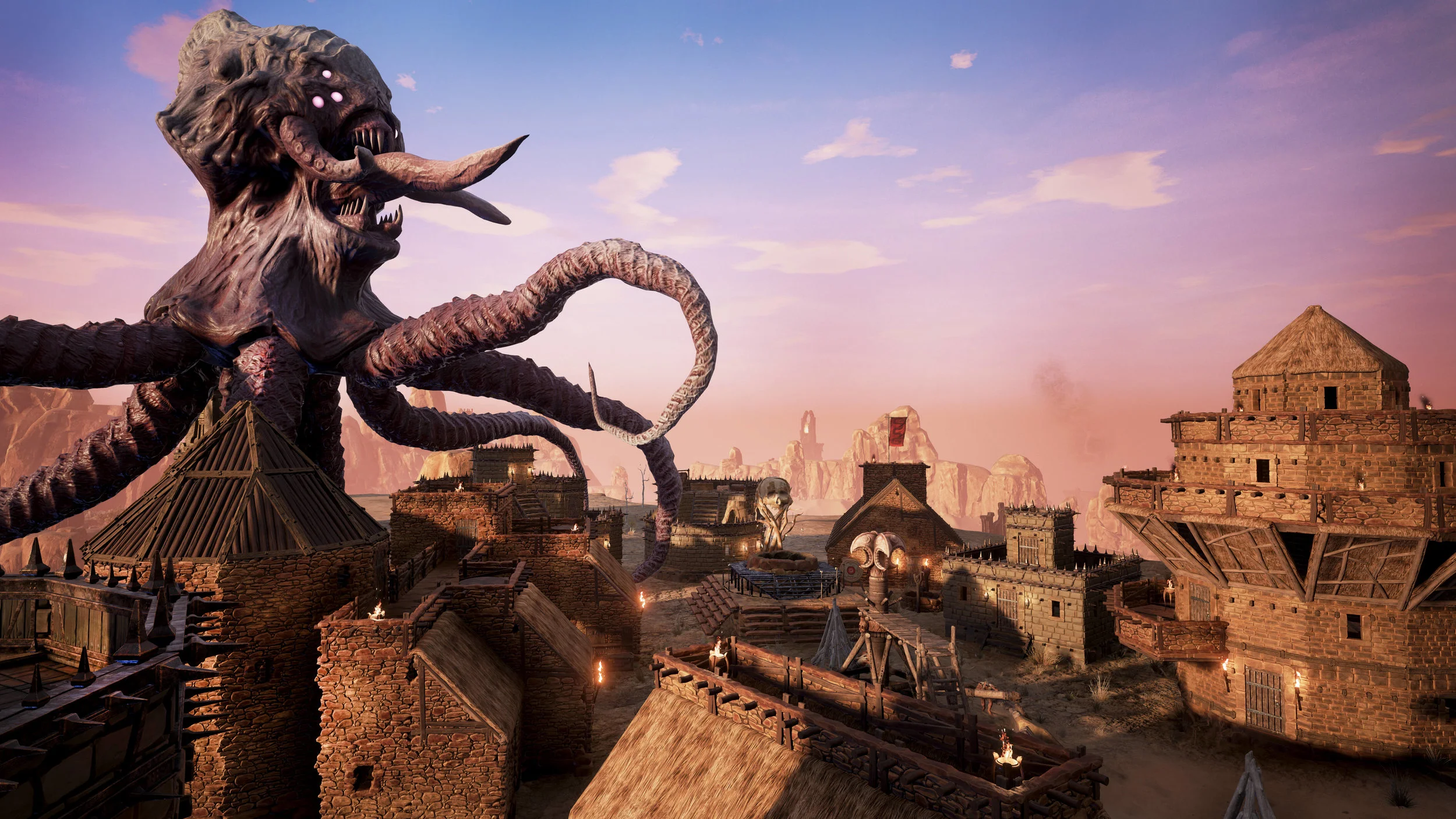
Earn enough devotion, though, and the gods give back. Players who commit fully to a religion can summon an avatar in the form of a landscape-scale manifestation of their chosen deity that they physically control. Mitra stomps across the map as a titanic stone figure, crushing enemy bases underfoot. Yog flies and drops corruption. Ymir swings a frost axe the size of a building. It’s spectacle, yes. But it’s spectacle that earns its place because everything leading to that moment has already taught you what worship costs in this world.
How the World of Conan Exiles Rewards the Reader
This is where Conan Exiles separates itself from every other survival game wearing a licensed skin: the dungeons themselves are like Howard stories you walk into.
Take the Dregs: the very first dungeon the team built, and still Bylos’s personal favorite. To open it, you have to drag a human being to a blood altar and slit their throat. That’s your entry fee. Down below, in the sewers beneath the old Giant King capital, something is waiting. A creature the Giant Kings bred and discarded, flushed into the depths as a worthless tadpole. But it had a psychic gift. It learned to project itself into the minds of nearby rats, luring them to the edge of its pool, eating them, growing. By the time you reach it, centuries later, it’s a massive slug sitting in the dark, and a woman’s voice has been whispering in your head the whole way down: come closer, my love. You’re so clever. Keep coming.
While this is not a direct analog to any single Howard story, it is the way Howard builds dread: something ancient, something patient, something that grew powerful in a place everyone else forgot about.
The Well of Skelos takes the opposite approach. Howard name-drops the Well across multiple stories. Black cultists worship there. Sorcerers invoke it. It functions in the text as shorthand for the deepest and most forbidden knowledge in the Hyborian Age, but Howard never describes it as a physical location. Bylos asked the obvious question: what if it is one? In Exiles, you descend into the Well and find the last surviving serpentmen, hiding beneath the volcano, still guarding the source of the dark knowledge that filtered up to human sorcerers over millennia.
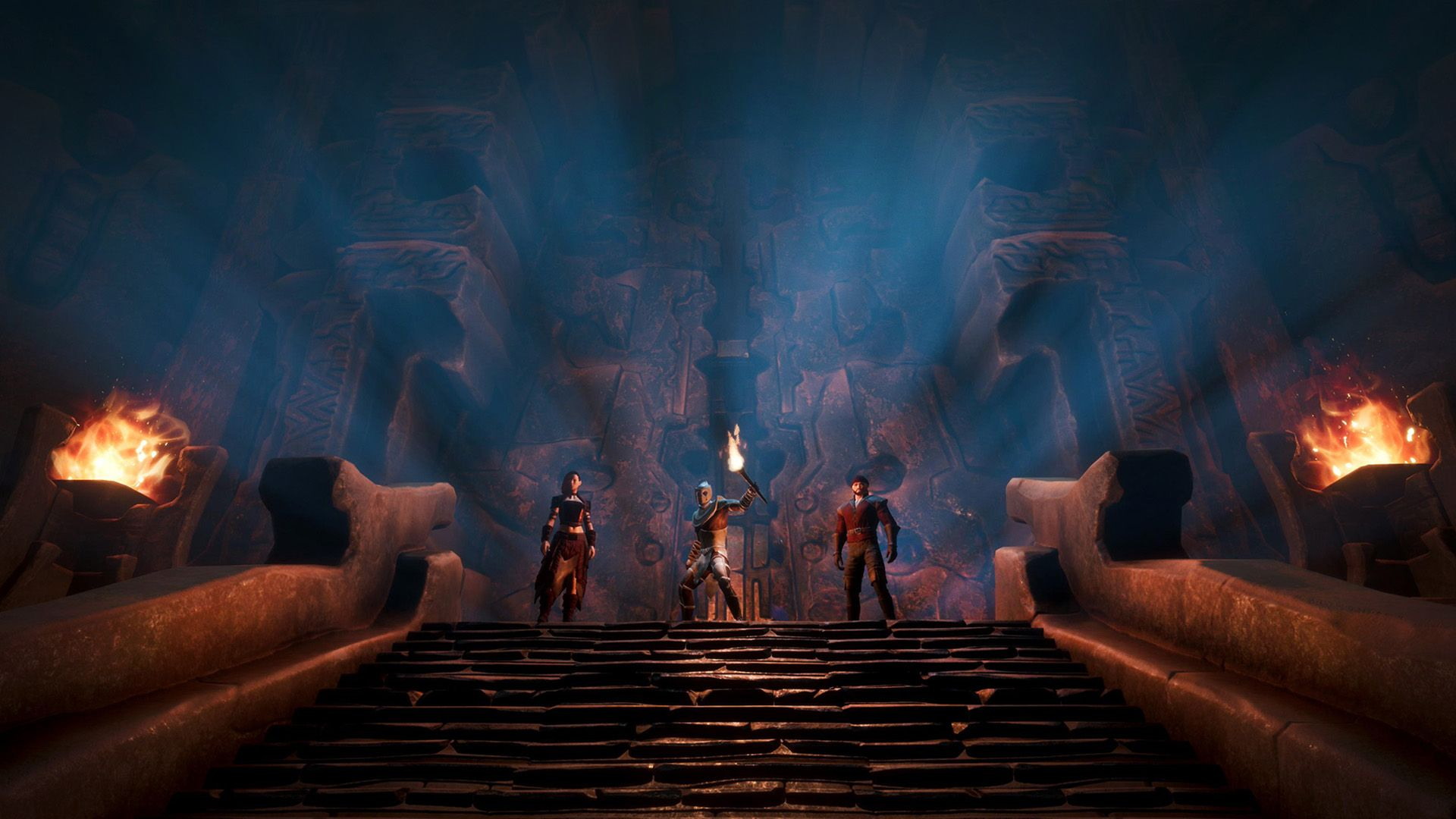
The Sunken City pushes into territory Howard shared with his pen pal Lovecraft. These are Lemurian ruins beneath the ocean, flooded by the same cataclysm that reshaped the Hyborian world. Survivors cling to air pockets in the wreckage, but isolation and time have done their work, as they’ve become increasingly fish-like, increasingly degenerate, and are left to worship Dagon in the deep. This is a specific flavor of cosmic horror where civilization doesn’t end with a bang but with a slow, wet slide into something less than human.
Even the creatures honor Howard’s restraint. The dragons in Exiles are wingless, lizard-like things, remnants of a breeding program the Giant Kings maintained and then abandoned when their civilization collapsed. Some roam wild. One undead specimen gets resurrected by sorcery for an arena fight. They are not majestic, they are not noble, they are just old and dangerous and abominable.
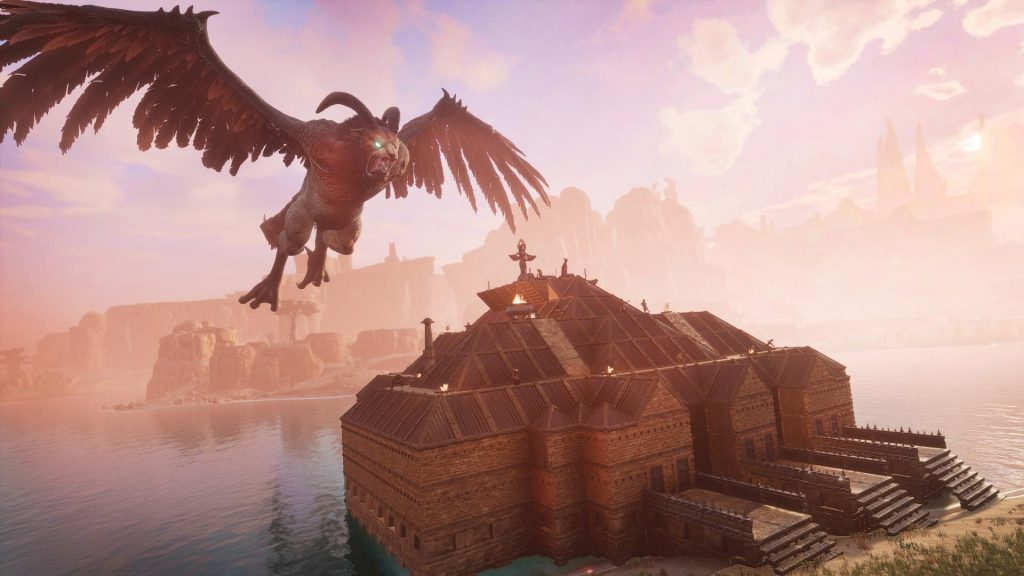
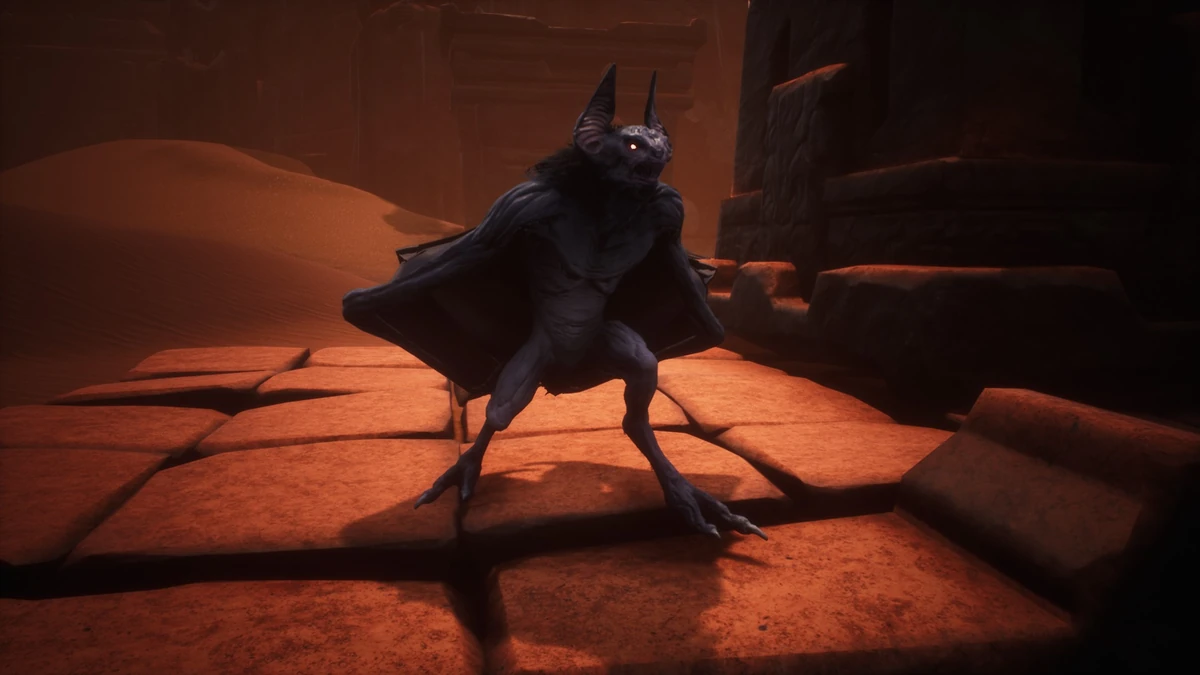
Bylos also pulled the bat demons that thread through Howard’s work into Exiles as summonable mounts: corrupt yourself deeply enough with sorcery, and you can call one down to carry you across the map. Transportation as moral compromise.
That philosophy extends to every weapon in the game. Bylos kept a hard rule: magic stays subtle. No glowing World of Warcraft auras, no enchanted particle effects. The Sword of Crom hits like a freight train but shatters fast. And every legendary weapon in the game carries a hand-written description that Bylos sourced by combing through Howard’s original texts for the right quote, the right tone.
There’s also a quieter story woven through the game that captures one of Howard’s most persistent themes. A character discovers the Mask of Lemuria, and as she wears it, it possesses her slowly and irreversibly, until she’s commanding golems as a self-proclaimed queen of a dead civilization. It’s the corrupting bargain that runs through Howard like a vein: power is always available, always hungry, and it always costs you more than you planned to pay.
How Joel Bylos Shape Conan: Exiles into the Perfect Survival Game
There’s a moment in Iron Shadows in the Moon that Joel Bylos keeps coming back to. Conan has been crawling through swamp reeds for weeks, eating insects, drinking mud, hiding from the army that destroyed his forces. He’s at his lowest. And then an enemy commander appears on the riverbank, and Conan rises out of the muck like something the swamp made and cuts the man down.
That’s the rhythm of Conan Exiles.
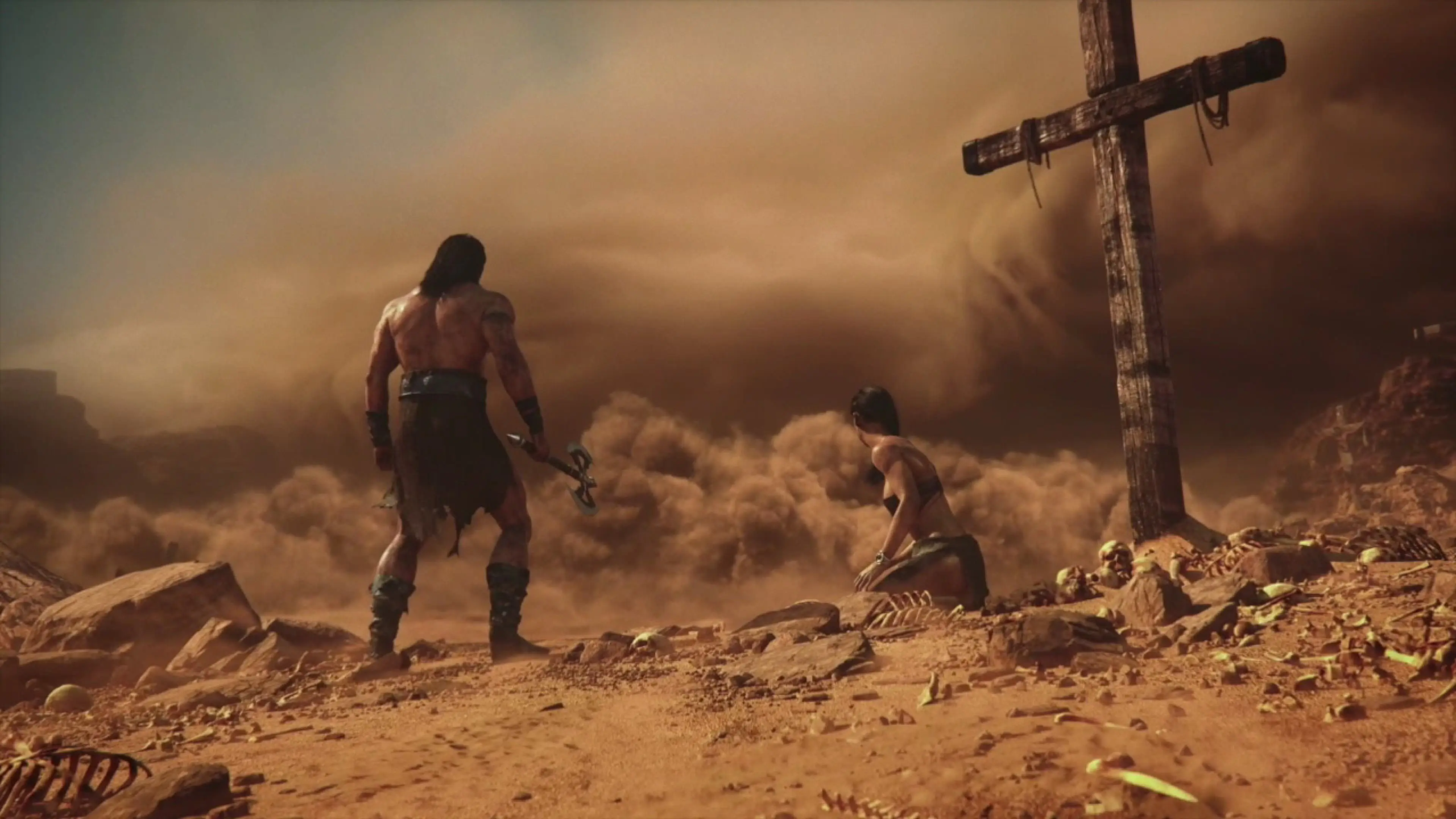
You start crucified in the desert. You have nothing. You craft stone tools with your hands, find water before you die of thirst, build shelter before the sandstorm buries you. It is unglamorous and frequently lethal. Bylos described the game’s progression as “survive, build, dominate” (and he was careful to note that “dominate” is not the same as “get rich.”)
The team held a development rule that Bylos called “options, not walls.” Don’t tell the player what to do. Give them ways to play and let them find their own path through the world. It’s a design philosophy, but it’s also a literary one, as Howard never wrote a protagonist who followed instructions. Conan takes what he wants, goes where he wants, and deals with the consequences when they catch up. The game gives you that same latitude and trusts you to use it.
Humorously, Byblos called the game a “sexy barbarian experience”. It sounds like marketing copy until you actually play the game. The world is lush, violent, and charged with the same energy Howard brought to the page. Bodies are bodies. Combat is up close and bloody. The character creator lets you be exactly as ridiculous or as striking as you want. It hasn’t been sanitized, and the community considers that a point of pride. Howard wrote a world where people lived hard and felt everything, and the game refuses to flinch from that.
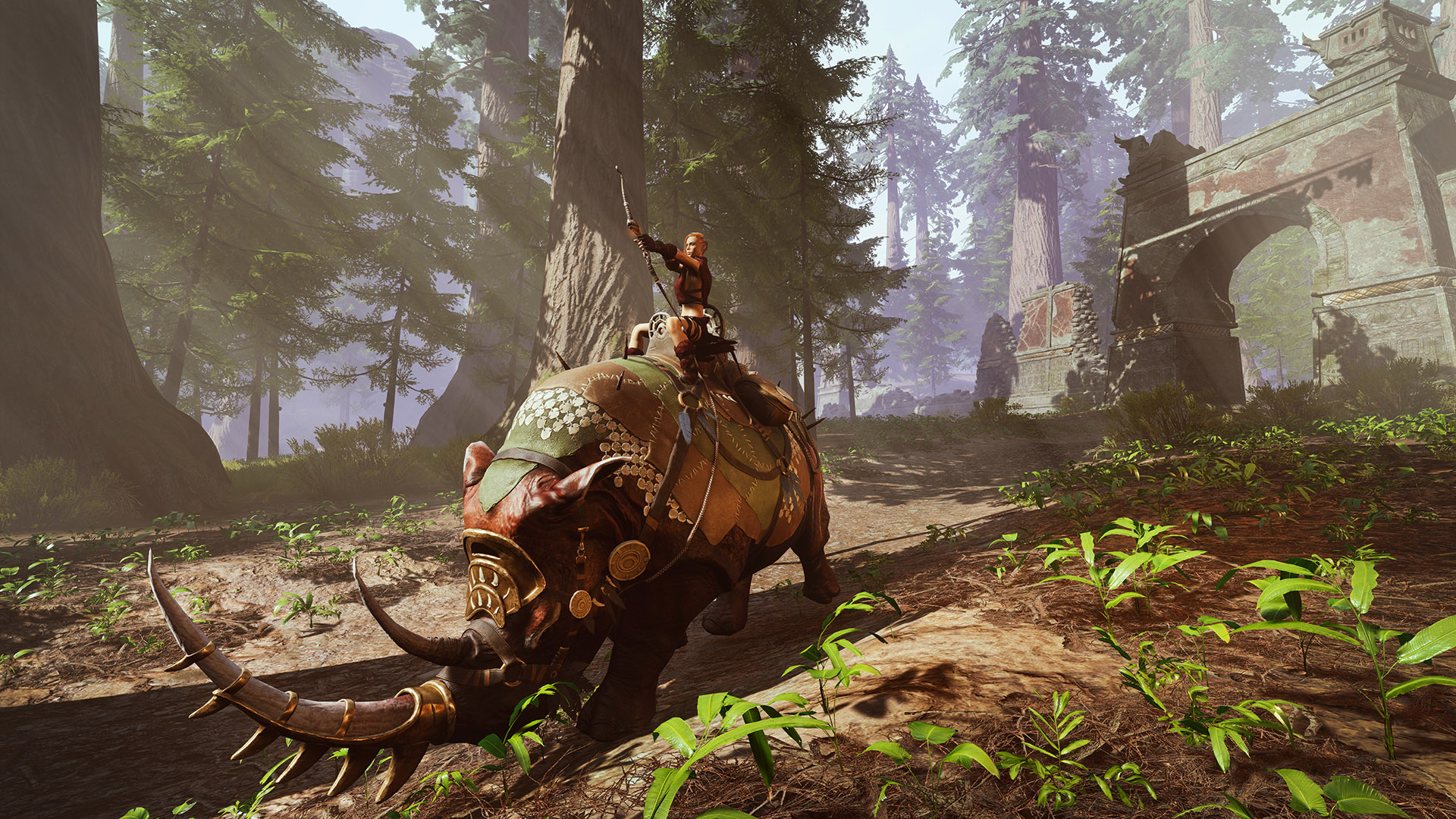
The modding system extended that ethos further. Players started building total conversion mods, creating new storylines, and constructing entire communities around a world they’d been given permission to own. For a game built on the bones of Howard’s imagination, there’s something fitting about that.
Here’s the thing that matters most, though, especially if you’re a Howard reader who’s never touched the game: it works in reverse. Bylos has lost count of the people who came to him saying they played Exiles first, got curious about the source material, went and read the original Howard stories and came back saying the stories were better. He agrees. But the fact that the game sent them there, that it was faithful enough and strange enough and good enough to make people want to read eighty-year-old pulp fiction, says everything about what Bylos and his team built.
If you’re one of those people who’s been meaning to try it (or if you played years ago and drifted away) Bylos has simple advice: start in single player, set the difficulty to civilized, find water, get shelter, and explore.
The world will do the rest.
Why Now Is the Time for the Conan: Exiles Remaster
On May 5th, Conan Exiles gets its Unreal Engine 5 upgrade. It is, by any measure, the most significant technical overhaul the game has received since launch.
Every asset in the game has been remastered. Landscapes, water, lighting–all of it is rebuilt to work with UE5’s Lumen system, which handles light and shadow in real time rather than relying on pre-baked solutions. The world that Bylos and his team spent years filling with Howard’s lore now looks like it deserves what’s inside it.
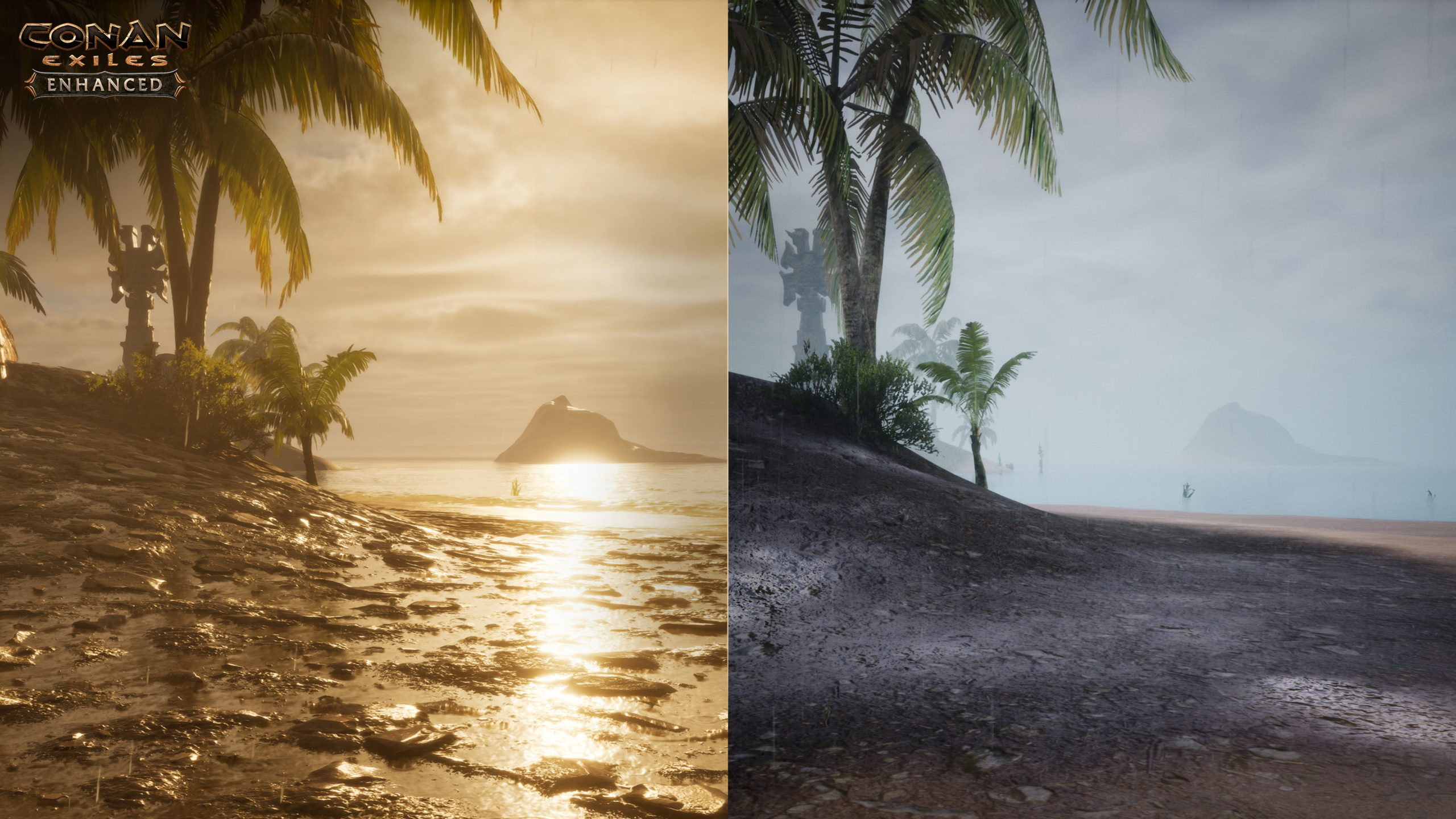
New UI elements also clean up the interface. Quality-of-life improvements like the ability to craft from any chest in your base sand down friction points that veterans have lived with for years. And the client size has been compressed from roughly 120GB down to about 40GB, which means the game no longer requires you to sacrifice half an SSD just to keep it installed.
The upgrade is free. If you own Conan Exiles on Steam, you own Conan Exiles Enhanced. No separate purchase, no deluxe edition, no catch.
Bylos has been testing it extensively, and he said what you’d hope to hear from someone who built the thing nine years ago: it felt like coming home. Playing through the world again, remembering everything, seeing it all rendered the way it was always supposed to look.
Pulp fantasy and sword and sorcery are feelings as much as they are genres. They’re hard to bottle. This game did it once on older hardware with older tools, and now it gets to do it again with the engine it deserves.
Conan Exiles Enhanced launches May 5th on Steam. It’s free for all existing owners.

Lo Terry
In his effort to help Heroic Signatures tell legendary stories, Lo Terry does a lot. Sometimes, that means spearheading an innovative, AI-driven tavern adventure. In others it means writing words in the voice of a mischievous merchant for people to chuckle at. It's a fun time.