


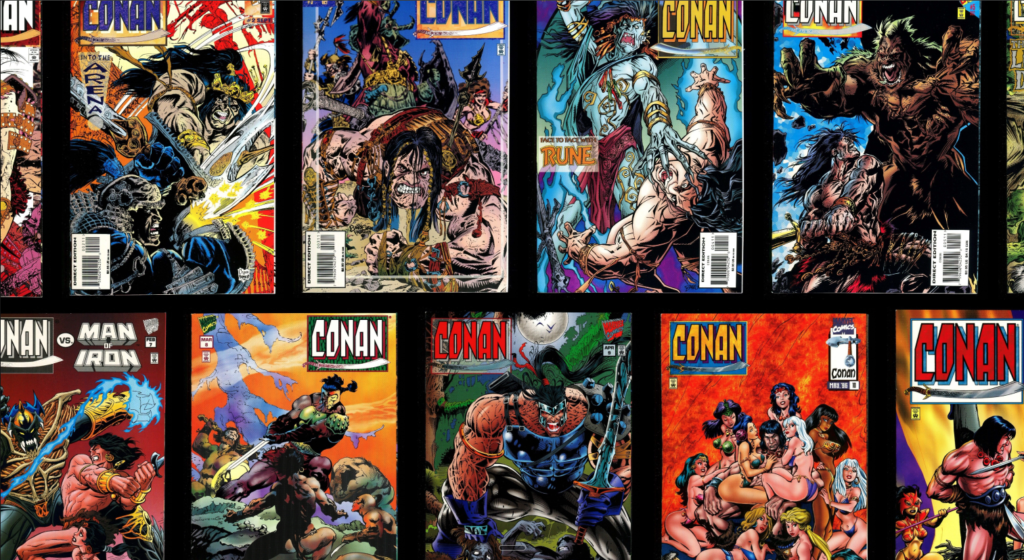
In 1999, Roy Thomas and John Buscema made one more Conan story together. Thomas wrote Marvel’s first Conan comic in 1970, and Buscema became the artist most tied to Marvel’s Conan.
That story, Death Covered in Gold, was part of the last run of Conan comics Marvel published, 35 issues from 1995 to 2000. Readers online have called this stretch “the lost Marvel era.” Until now, none of it had ever been collected in English.
With Titan Comics, we have gathered all 35 issues into Conan the Miniseries: The Original Comics Years Omnibus. A few of them pick up Howard’s own stories right where he left off.
To really appreciate what’s collected here, we have to start at the end of Marvel’s original Conan run. So before we get to the people who made these stories, here is how they came to be gathered in one book.
The Creators Who Came Back
After 1996, Marvel told its Conan stories in three-issue tales, each one pairing a writer with a guest artist. Roy Thomas came back to write four of them.
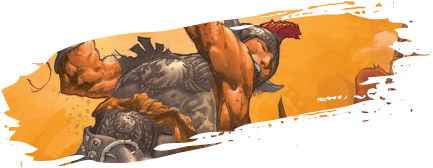
John Buscema came back with him. For Death Covered in Gold he penciled every page and then inked the pages himself. He was 71, and it was his last color Conan story with Thomas.
Thomas later wrote about these minis in his foreword to The Marvel Art of Conan the Barbarian. He named the artists who drew them, and of Buscema’s pages he said “the master had definitely not lost his touch.”
The guest artists gave the Hyborian Age a new look. Several came from Italy, including Claudio Castellini and Paolo Parente. Stefano Raffaele, another Italian, drew two of the Thomas stories. Geof Isherwood drew a pair of the minis as well.
The writers went beyond Thomas too. Chuck Dixon, a Savage Sword of Conan veteran, wrote The Usurper, and Roland Green, who wrote Conan novels for Tor, took on two of the tales.
These writers kept reaching back to Howard. They returned to places and people from his stories, starting with the one Thomas and Buscema chose.
Where to Start
The book runs in the order Marvel published these stories, so the strongest ones sit in the back half. You don’t have to read it front to back, though. Conan’s life order won’t help much either, since different writers told these as standalone tales, so open to these three first.
Death Covered in Gold #1–3 (1999)
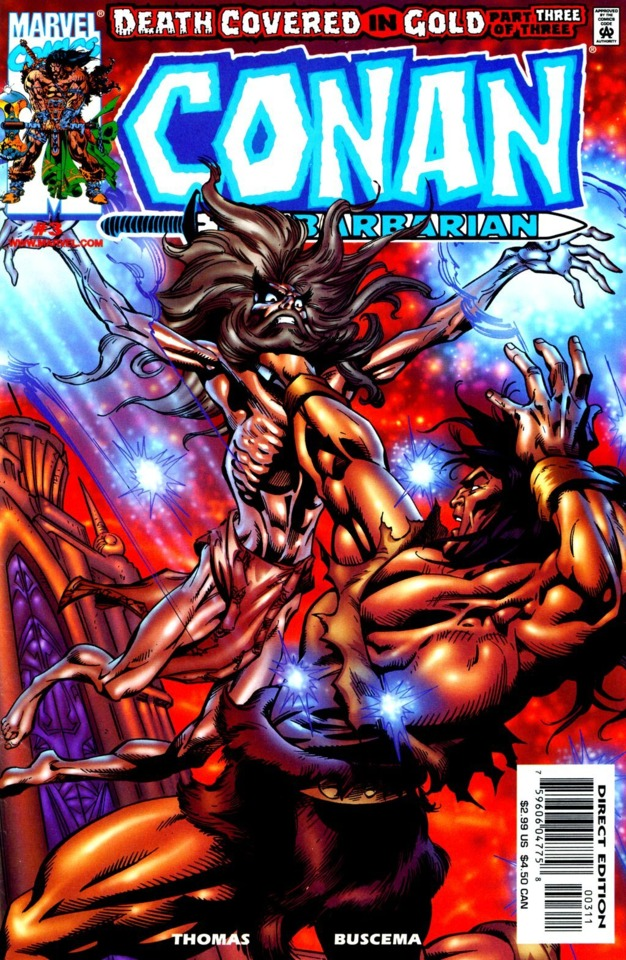
This is the heart of the book.
It is a sequel to Howard’s “Rogues in the House.” Jenna, the woman who betrayed Conan in that tale, now runs a tavern in Khorala, in Ophir. Conan comes to Ophir when an old prospector and his daughter hire him to guard their gold mine.
Claim-jumpers want the mine. Under it, a worm-monster moves through the earth, and golden shadow-demons rise to meet Conan.
After you’re done with this one, move on to the next The Lord of the Spiders.
The Lord of the Spiders #1–3 (1998)
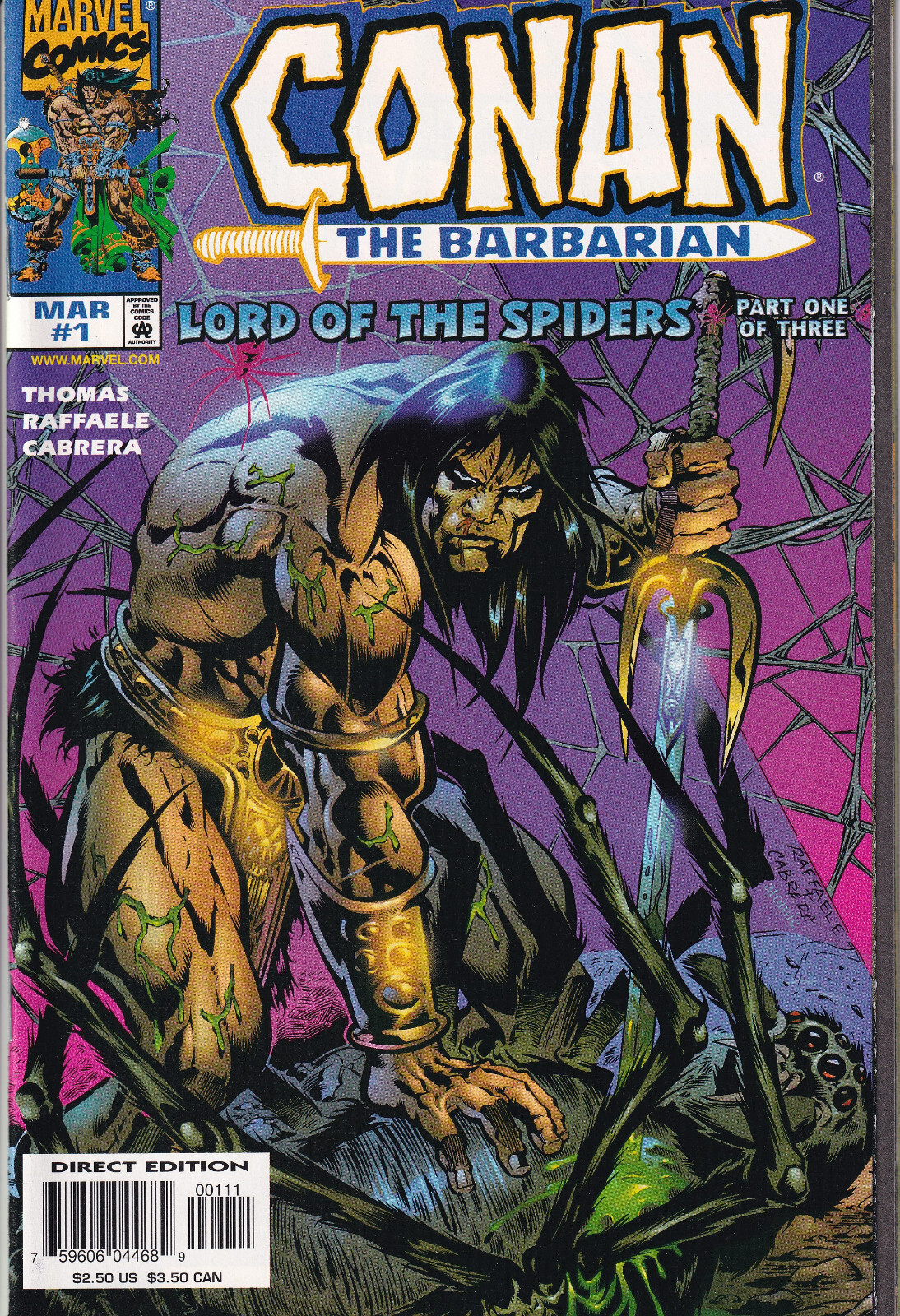
Roy Thomas wrote this one with Stefano Raffaele on art. It goes back to Conan’s thief years in Zamora, the same stretch of his life Howard covered in “The Tower of the Elephant.”
Young Conan is working the streets of Arenjun, the Zamorian city of thieves. A tavern brawl goes wrong and lands him in the hands of a spider-cult that serves the god Zath.
This was Raffaele’s first Conan story with Thomas. Take your time with his pages, then move on to The Usurper.
The Usurper #1–3 (1997–98)
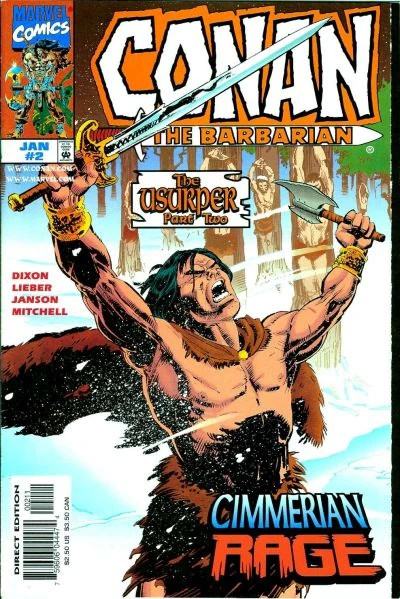
Chuck Dixon wrote this one, with Steve Lieber’s pencils under Klaus Janson’s inks.
In it, Conan is a paid mercenary in a foreign warlord’s army. He takes the coin and does the work. Then he learns where the army marches next, and its target is his homeland: Cimmeria.
There is almost no sorcery here, so the story stays on the ground with the army. Part 3 takes its title from Howard’s “The Road of Kings.”
The Rest of the Book
Once you have those three, read the others in any order you like.
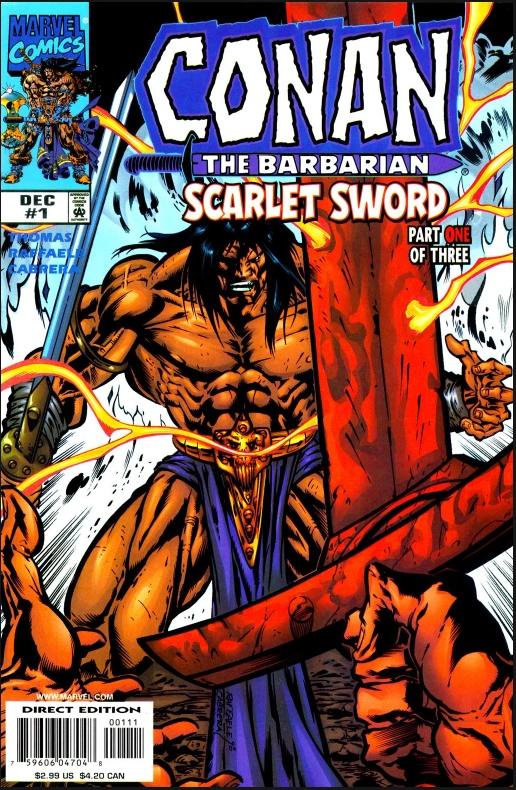
Scarlet Sword reunites Thomas and Raffaele, so it follows naturally from The Lord of the Spiders. Conan is a mercenary now, selling his sword, and Thomas tells it in the classic sword-and-sorcery style he brought to Marvel’s first Conan comics.
River of Blood starts where Howard’s “Red Nails” ends. Conan and Valeria leave Xuchotl behind and land in the Black Kingdoms, caught between two warring tribes. Roland Green wrote it and Geof Isherwood drew it, with covers by Claudio Castellini.
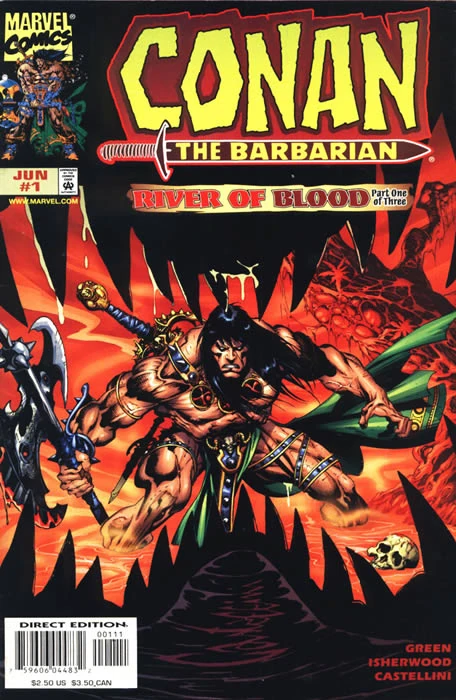
Partway through, a dying sorcerer passes Conan the power to command giant crocodiles. Marvel’s own ads had fun with that, calling him “Conan, Lord of the Crocodiles.” It is cheerful pulp adventure. Anyone who loved Valeria in Howard’s story gets more time with her here.
The “Stalker of the Woods” story is another great one that ran as Conan the Barbarian #1–3 in 1997, when Conan returned to Marvel’s shelves. Roland Green wrote it and Claudio Castellini drew it in a lush European style. Conan is on the frontier, hunting a supernatural stalker through the forest. Castellini’s original pages from this story now sell at art auctions in Italy.
Conan (1995) #1–11 is the longest run in the book. Written mostly by Larry Hama with art by Barry Crain, it follows straight on from Conan the Adventurer. Young Conan fights his way out of the death pits of Harach-Gnar and then roams Turan.
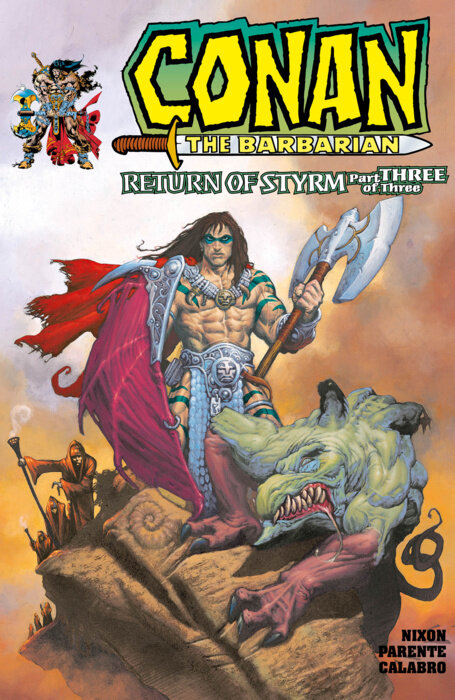
Return of Styrm is the strangest tale here (and the most visual). Matt Nixon wrote it for Paolo Parente, whose pages Marco Soresina inked. Conan travels to eastern lands far off Howard’s map to face the dragon Styrm. Parente’s art is so striking that it became the cover of the Regular Edition. Read this one for the art.
No matter what, though, we recommend you save Flame and the Fiend for last. It was Marvel’s final Conan comic, written by Roy Thomas and drawn by Geof Isherwood, set in Akif and Turan.
Thomas brings back the cast he built at Marvel, including Fafnir, Zula, Isparana and the sorcerer Kulan Gath. He sets them beside Howard’s own Shah Amurath from “Iron Shadows in the Moon.” The title honors Conan the Barbarian #44 from 1974, “Of Flame and the Fiend!”
For longtime fans it is a farewell to thirty years of Marvel’s Conan, and newer readers will get more from it after reading the rest of the book.
Preorder the Conan the Miniseries: The Original Comics Years Omnibus Vol.1
For decades these stories sat scattered in back issues. In January 2027, we’re bringing them back because they belong on a shelf together—beside the rest of Marvel’s Conan!
Conan the Miniseries: The Original Comics Years Omnibus runs 896 pages and costs $150. It goes on sale January 26, 2027, and we can’t recommend fast enough that you pre-order it.
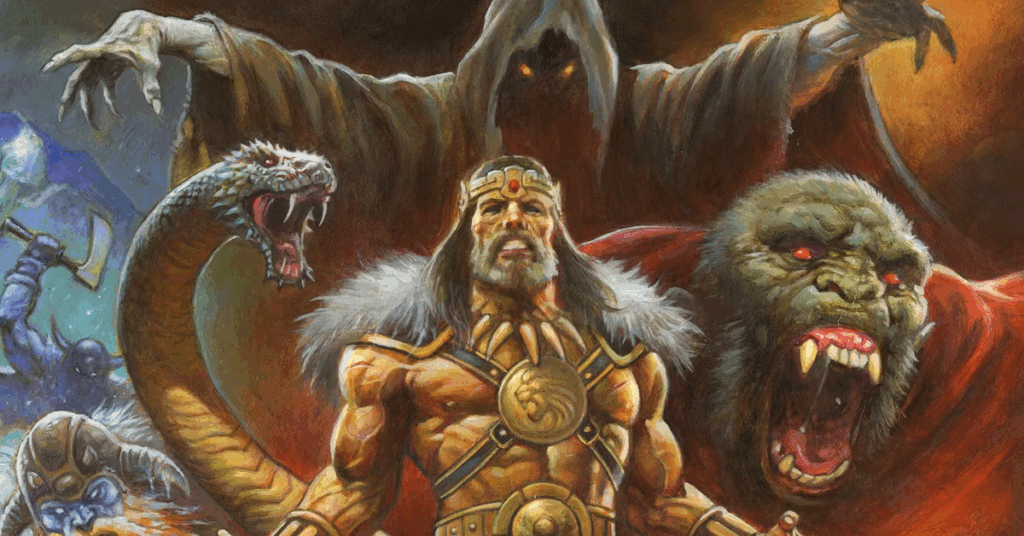
There are two covers to choose from. Paolo Parente’s art is on the Regular Edition, and comic shops will carry an edition with a cover by Claudio Castellini.
If you want the run that comes right before this one, Conan the Adventurer: The Original Comics Years Omnibus ($60) holds the young-Conan stories that lead straight into Conan (1995). You can find it here.
Get your copy of Conan the Miniseries here today to enjoy a truly epic collection from one of the most legendary comic runs of all time.

Lo Terry
In his effort to help Heroic Signatures tell legendary stories, Lo Terry does a lot. Sometimes, that means spearheading an innovative, AI-driven tavern adventure. In others it means writing words in the voice of a mischievous merchant for people to chuckle at. It's a fun time.