

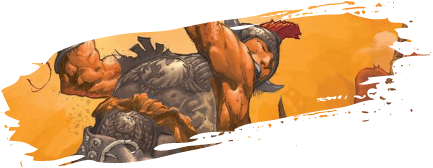
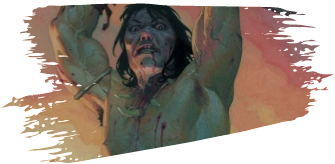
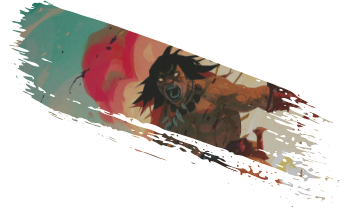


The Witcher, Dark Souls, Game of Thrones, The First Law, Dungeons & Dragons.
These properties share more than a shelf in a fantasy section or a section in a game or comic shop.
They share a genre, one that most of their fans have never heard named.
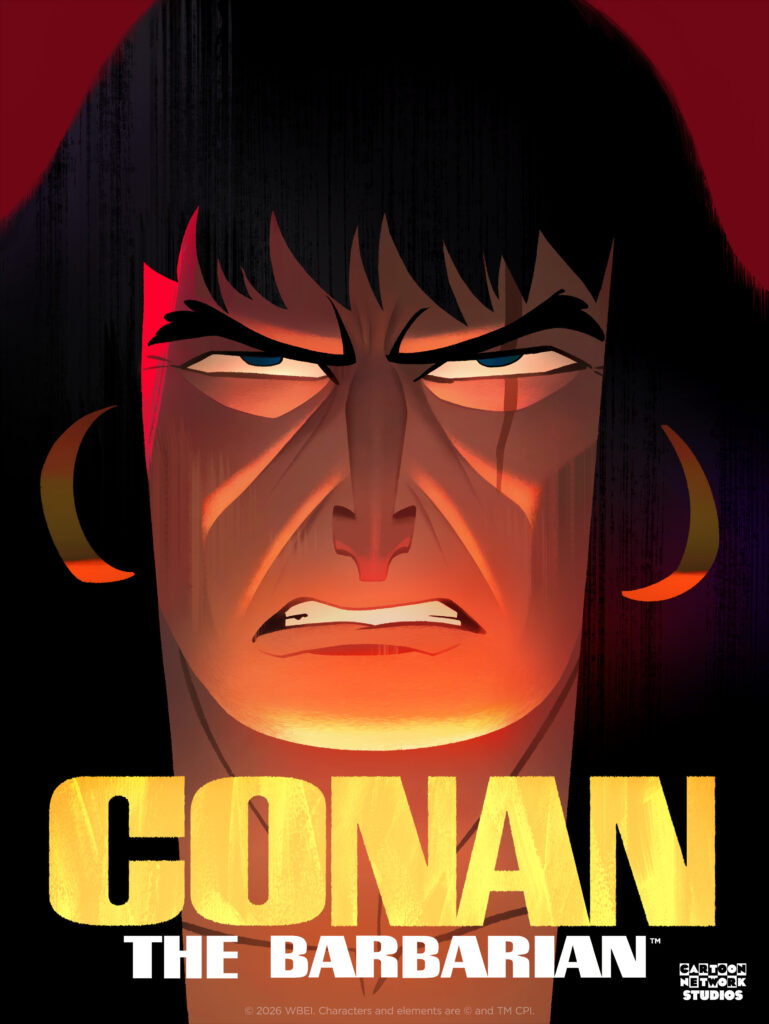
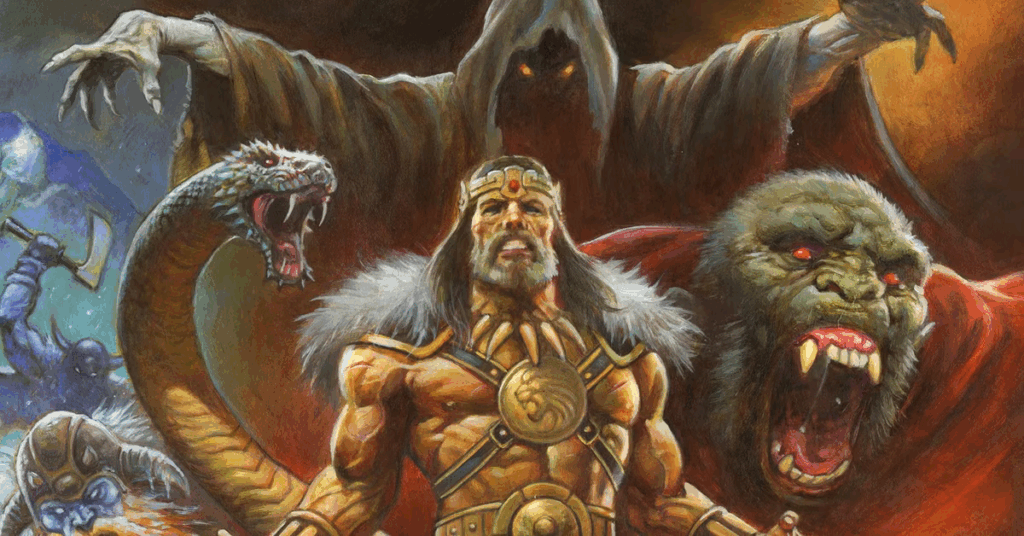
It’s called sword and sorcery, and nearly everything in it traces back to a single writer working out of a small Texas town in the 1930s named Robert E. Howard.
The reason most people don’t know the name is that it’s spent the better part of a century in the shadow of high fantasy – the genre most readers think of when they think of the word “fantasy” at all.
What Are the Differences in How Sword and Sorcery and Fantasy Stories are Told?
High fantasy is a museum: vast, curated, reverential. You wander its halls admiring the preserved beauty of ancient civilizations while a cosmic war between good and evil plays out overhead.
Sword and sorcery, on the other hand, is a corridor you weren’t supposed to find, with something moving at the other end of it.
Put another way: one genre asks whether you can save the world. The other asks whether you can survive the night.
That difference in feeling comes from real structural differences that run through every level of how these stories are built.
The Scale in Sword and Sorcery Stories is Smaller
High fantasy operates at continental scope. The threat is world-ending, and the narrative needs that scale to justify its length in the form of hundreds of pages of troop movements, political alliances, and mythological backstory exist because the stakes demand them. Tolkien’s War of the Ring spans every free nation of Middle-earth. Jordan’s Last Battle engulfs an entire reality. Even Martin, who resists the genre’s tidier impulses, still builds toward a threat that requires a continent’s worth of fractured kingdoms to unite or die.
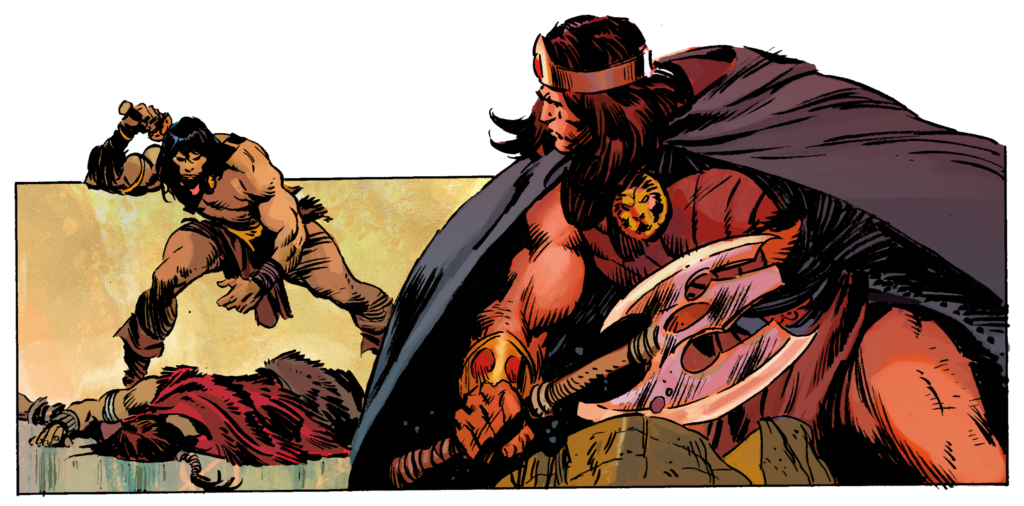
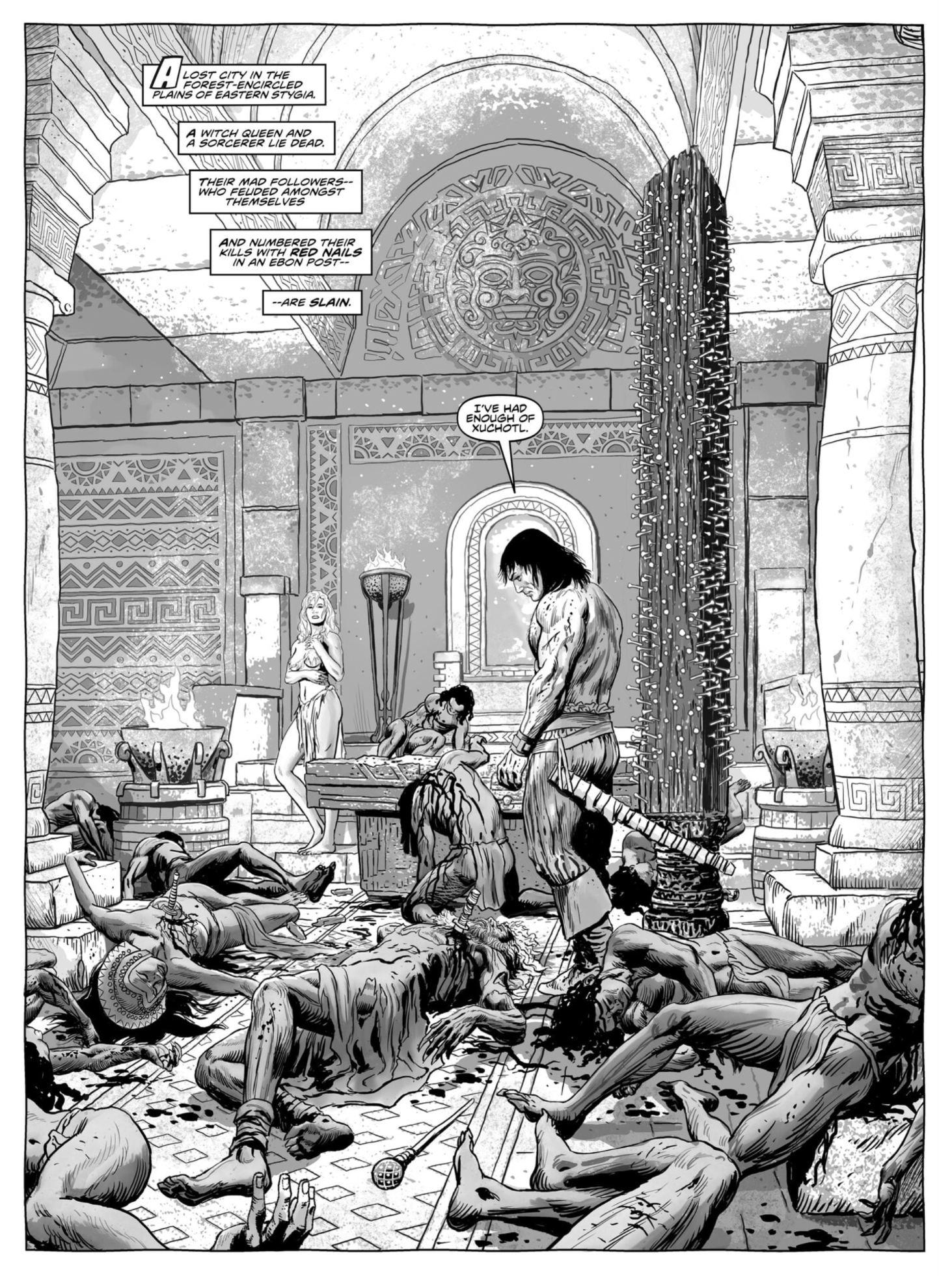
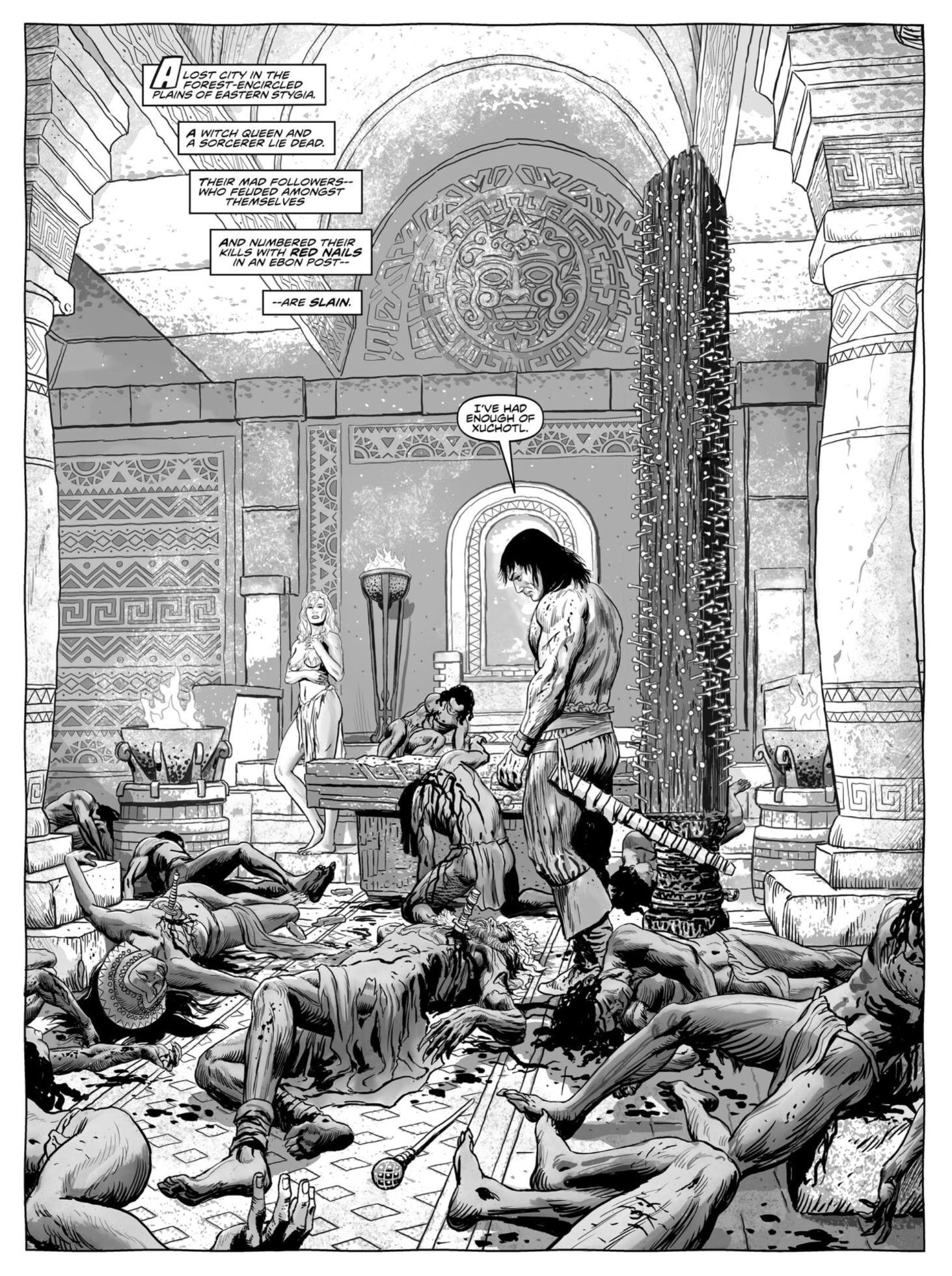
Sword and sorcery compresses. The scope is often a single city, a single ruin, a single night. Howard’s “Rogues in the House” takes place almost entirely inside one building. “Red Nails” unfolds within the walls of a dying city that the outside world has forgotten. The genre doesn’t need geopolitical context because the story’s boundaries are drawn by what the protagonist can see, reach, and fight. If a kingdom exists somewhere beyond the immediate situation, it is irrelevant to the matter at hand.
The Protagonists in Sword and Sorcery Stories are Less Driven by Destiny
In high fantasy, the protagonist bears a burden larger than themselves. Frodo at the Council of Elrond volunteers to carry the One Ring, accepting near-certain destruction to save a world he loves but barely understands at full scale. Rand al’Thor is the Dragon Reborn whether he wants to be or not. The role is imposed by prophecy, lineage, or cosmic necessity, and the character’s arc is defined by whether they can rise to meet it.
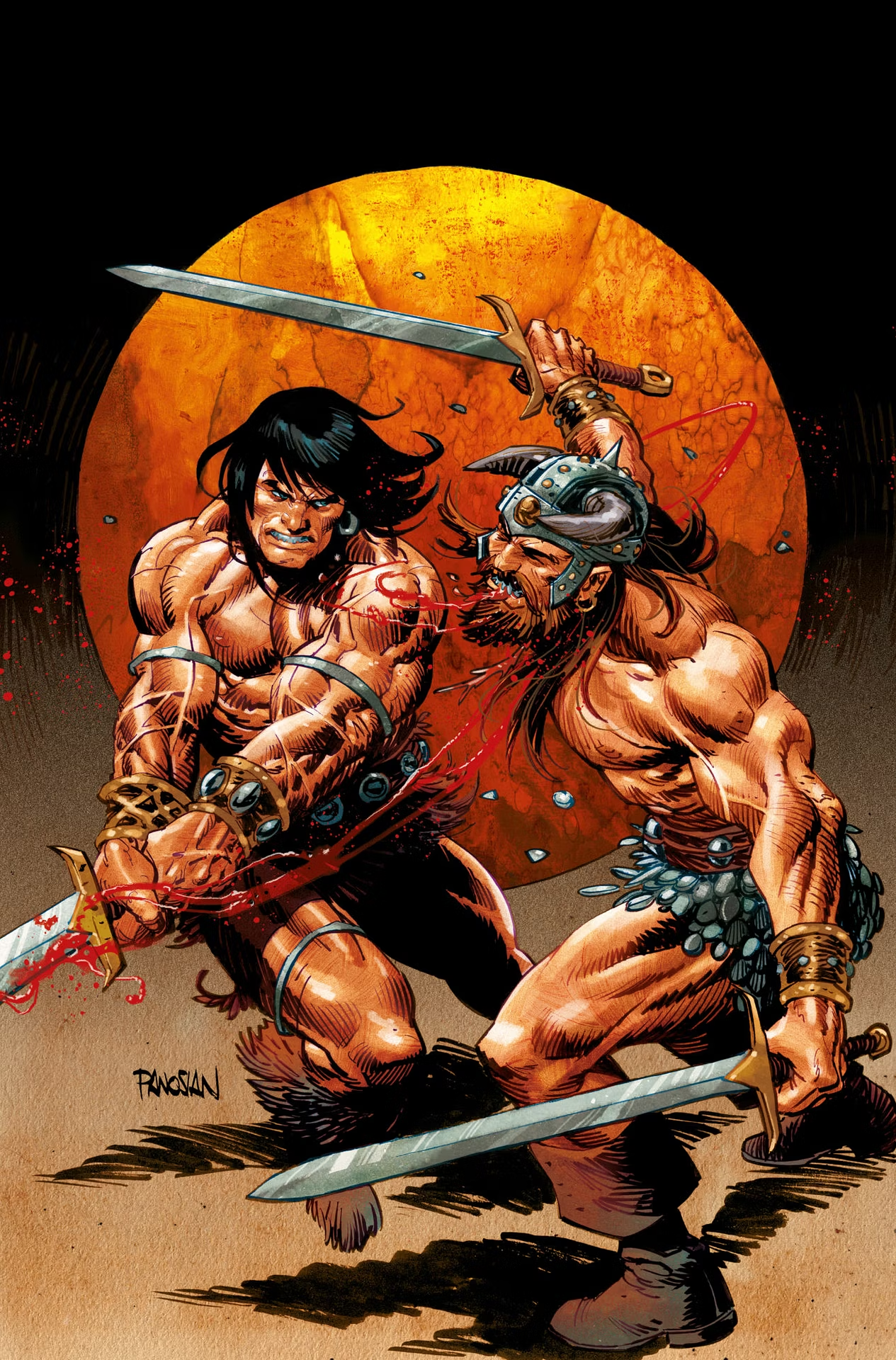
Sword and sorcery protagonists are not burdened. They are unmoored. They have no prophecy, no birthright, no fellowship walking beside them with complementary skills. Conan drifts from thief to pirate to mercenary to king across Howard’s stories, because he is restless, capable, and refuses to stay anywhere that bores him. Leiber’s Fafhrd and the Gray Mouser are essentially two gifted vagrants who keep getting into trouble because trouble is more interesting than honest work. Far from the person the world needs, sword and sorcery protagonists are often just the person who keeps showing up.
Magic is Completely Untrusted in Sword and Sorcery
High fantasy systematizes magic. Tolkien’s wizards are Maiar: angelic beings with defined roles in a cosmic hierarchy. Sanderson built an entire career on magic systems with laws as rigorous as physics. Jordan’s channelers draw from gendered halves of a universal source with learnable weaves and predictable consequences. In these worlds, magic is infrastructure. Characters study it, institutions regulate it, and protagonists wield it as a force for good (or at least a force they can control).
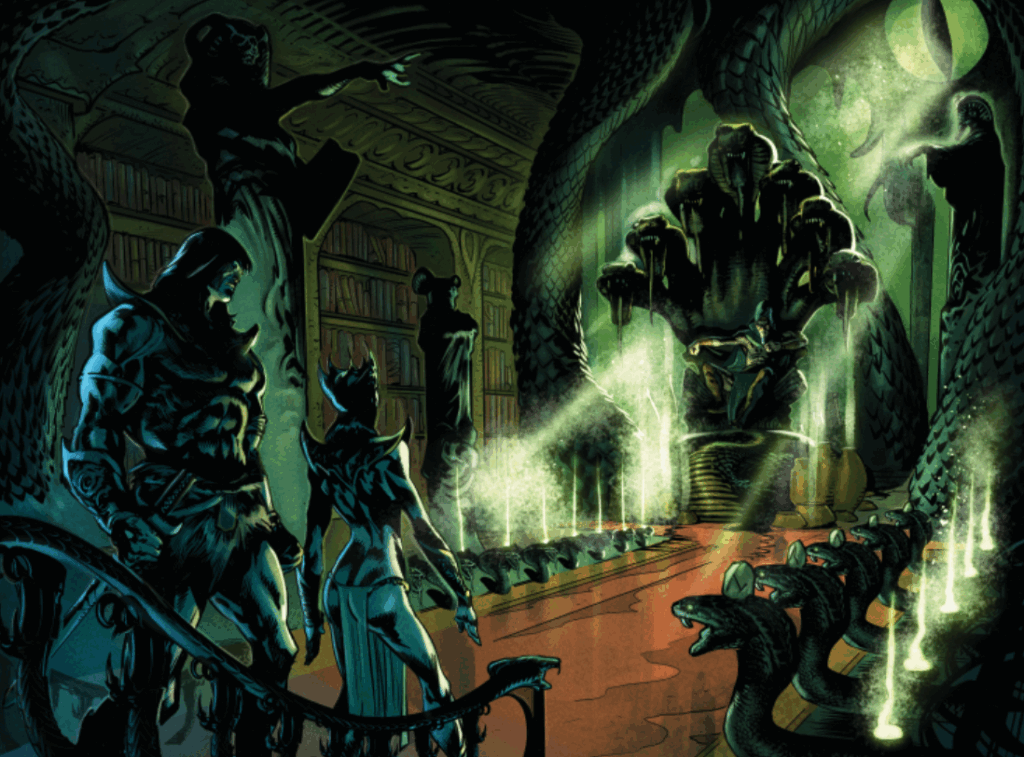
In, sword and sorcery, characters treat magic as rot. In Howard’s stories, sorcery is wielded almost exclusively by villains. Conan’s response to magic is not to learn it but to break the thing casting it. Moorcock’s Elric is the great exception: a sorcerer-protagonist. But his magic is the point of the subversion. Stormbringer, his runesword, feeds on the souls of everyone it kills, including the people Elric loves most. His power is a parasite. Wagner’s Kane commands sorcery across millennia, and it has made him into something immortal, isolated, and incapable of connection. Even Sapkowski’s Geralt, a mutant monster-hunter, relies on simple combat signs rather than true sorcery; the powerful mages in the Witcher’s world are political operators whose magic serves their ambition, not any recognizable good. In sword and sorcery, magic is typically thought of in similar terms as the harsh landscapes the stories are set in: survival in spite of it.
Morality is Much More Gray in Sword and Sorcery Stories
High fantasy draws moral lines. Tolkien’s work is built on the certainty that good and evil are real, distinguishable forces — Gandalf and Sauron are not two perspectives on the same question. Even Martin, who complicated this more than any epic fantasist before him, still operates within a framework where the reader can identify cruelty and honor, even when the characters can’t. The moral vocabulary exists. Characters may fail to live up to it, but it’s there.
Sword and sorcery does not offer that vocabulary. Conan raids merchant ships with Bêlit because he is in love with her and enjoys piracy. That is the entire moral calculus. Elric sacks his own ancestral city. Fafhrd and the Gray Mouser rob people who probably didn’t deserve it. The genre does not ask whether these actions are right or wrong — it asks whether the character survived and what it cost them. Morality in sword and sorcery is not a spectrum between good and evil. It is a series of transactions between desire and consequence.
Sword and Sorcery Stories Have Shorter, More Episodic Narrative Shape
High fantasy is architectural. It builds toward something. The Lord of the Rings moves from the Shire to Mount Doom across three volumes with the weight of inevitability. The Wheel of Time spans fourteen books toward Tarmon Gai’don. These narratives need resolution because their worldview demands it for, if good and evil are real, the conflict between them must eventually reach a climax.
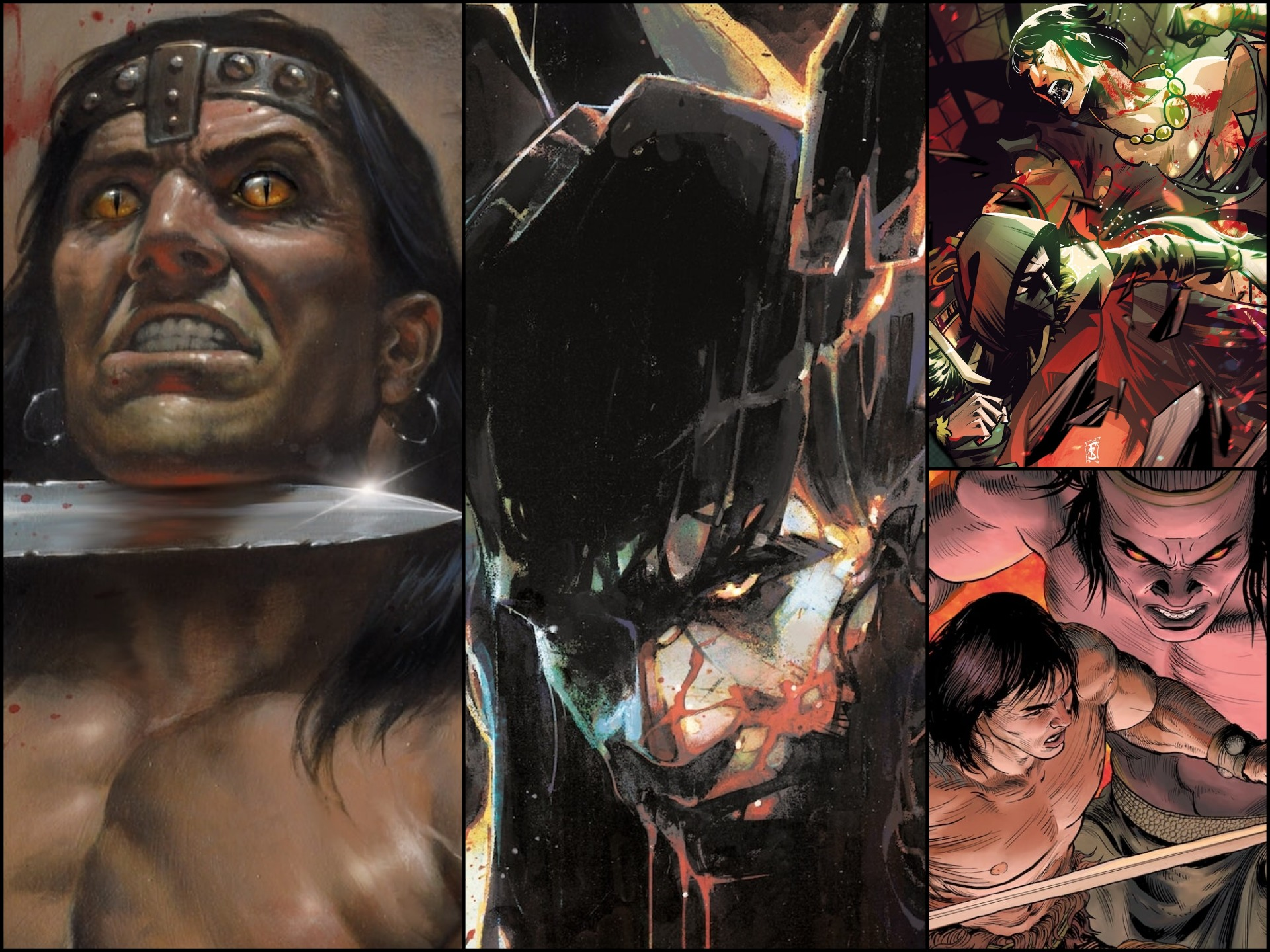
Sword and sorcery, on the other hand, is very episodic. Howard wrote Conan stories out of chronological order for Weird Tales, each one self-contained, each one sellable on its own. You can read “The Tower of the Elephant” without knowing anything that came before or after it. Sapkowski’s first two Witcher books, too, are short story collections in this same tradition, with each tale a complete monster hunt or moral dilemma with its own beginning, middle, and end. The episodic structure is as if the genre is saying: there is no grand arc to history. Things happen, and then other things happen, and the best you can do is be ready.
The Worldview of Sword and Sorcery is Much More Brutal
High fantasy stories tend to suggest to readers that, should chaos arise, order can be restored. The rightful king can return to his throne. The dark lord can be defeated. The Shire can be scoured and rebuilt. Tolkien called this eucatastrophe, or the sudden turn toward joy that validates the entire struggle. Sam Gamgee standing in the ruins of Osgiliath, insisting that there is good in the world and it is worth fighting for is perhaps the clearest example of the genre’s thesis statement.
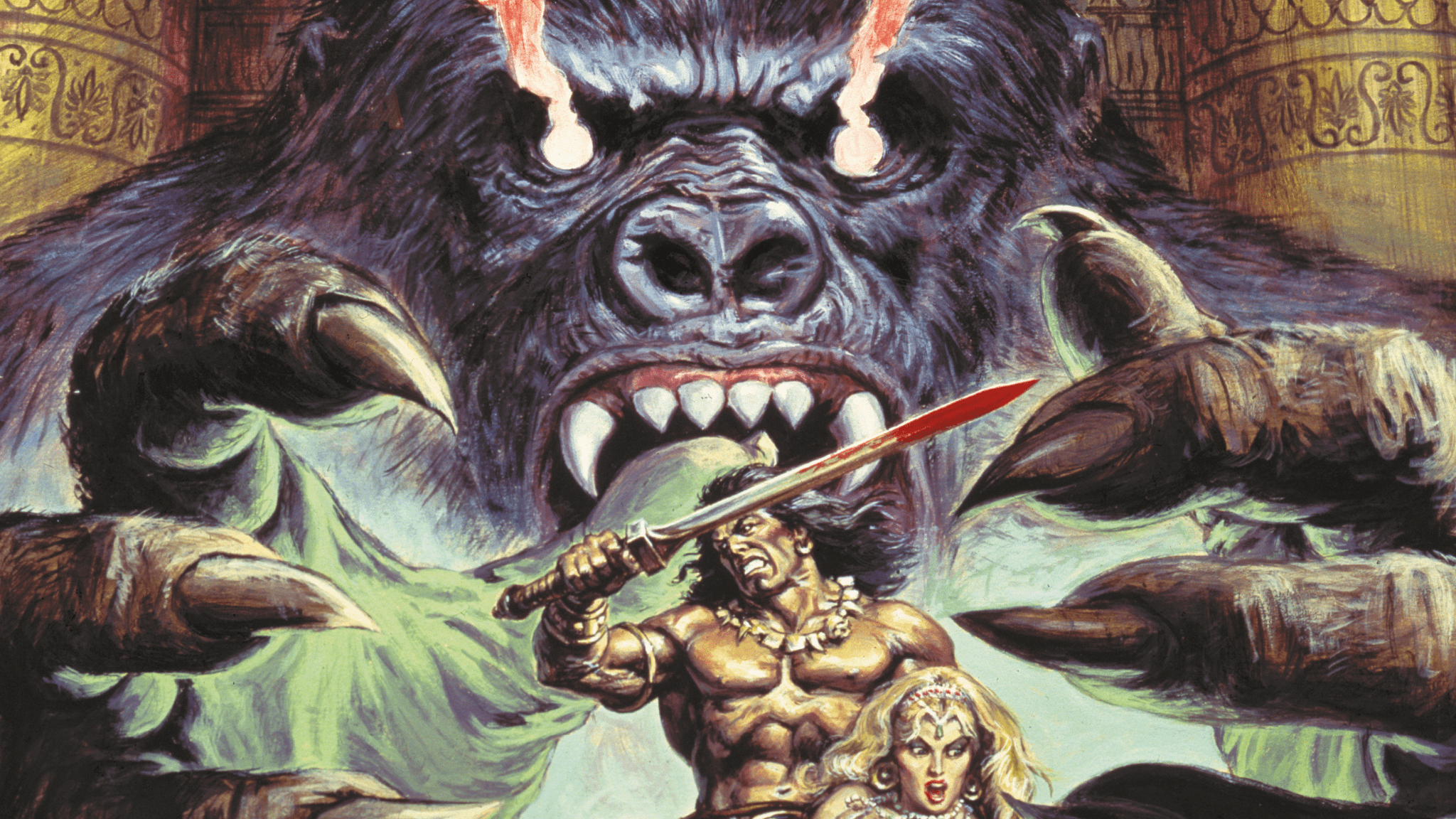
Sword and sorcery, on the other hand, does not believe order can be restored, because it does not believe order existed in the first place. Civilization, in Howard’s view, is a veneer: impressive to look at, rotten underneath, and always one generation from collapse. His fantasy eschewed escape into a beautiful dream and opted instead to plunge into a violent reality where the only reliable thing was physical vitality and the edge of a sword. The genre’s thesis that good is a story powerful people tell to justify their power, and the protagonist is better off trusting a blade they can sharpen than a prophecy they can’t verify.
Who Invented Sword and Sorcery?
Robert E. Howard is widely considered the original creator of the sword and sorcery genre. Before he sat down at his typewriter in Cross Plains, Texas, fantasy meant fairy tales and dreamscapes. George MacDonald wrote romantic allegories. William Morris built archaic, chivalric worlds. Lord Dunsany conjured misty mythic kingdoms. It was beautiful, polite, and utterly bloodless.
Howard thought that was nonsense. Writing from a desolate oil-boom town in the middle of nowhere, he looked at civilization and saw something fragile. So in 1932, he sent a story called “The Phoenix on the Sword” to Weird Tales magazine, and Conan walked onto the page for the first time. The fantasy genre hasn’t been the same since.
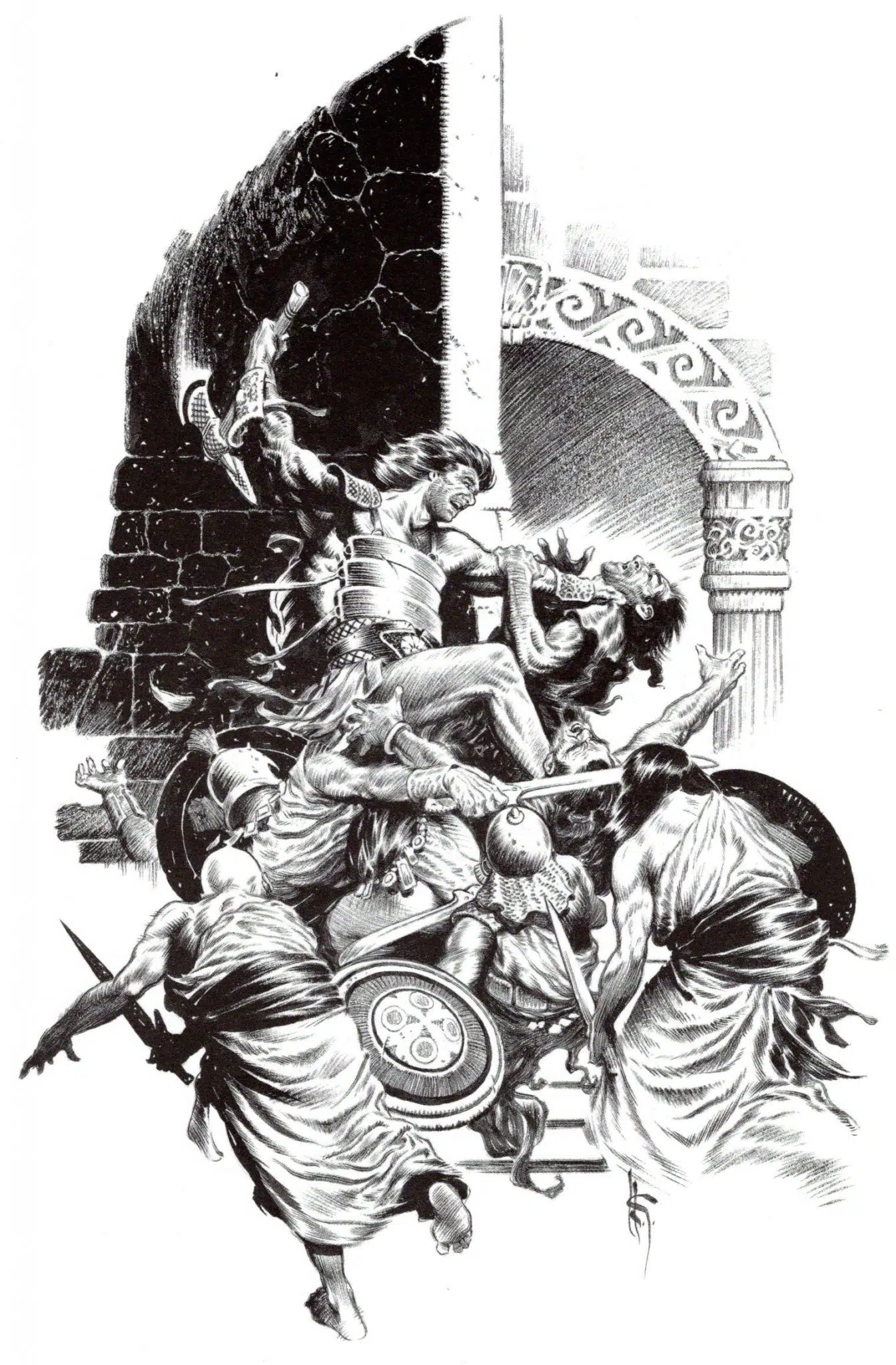
What Howard did was take the fast, violent energy of westerns and pulp adventure and dropped it into a fantasy world that felt like real history with the serial numbers filed off. No meticulous worldbuilding for its own sake. No kind knights. Just a barbarian, a sword, and a world that wanted him dead on every page.
He shared those Weird Tales pages with H.P. Lovecraft and Clark Ashton Smith. All three wrote about cosmic horrors and forces beyond human comprehension. Lovecraft’s characters froze in the face of it. Smith’s characters died beautifully. Howard’s character punched it in the jaw.
However, the genre didn’t officially get the name ‘sword and sorcery’ until 1961, when Fritz Leiber coined the term to describe exactly the kind of story Howard had written three decades prior. Leiber called Howard the superior pulp writer and the blueprint for everything that followed. Michael Moorcock created Elric as the deliberate anti-Conan and still couldn’t escape the template Howard built. Karl Edward Wagner pushed it into darker territory with Kane and spent years editing the definitive Howard texts because he understood what the source material was worth.
So that’s the long and short of it. The entire genre came from one writer, working out of a small Texas town in the 1930s and every barbarian, every dark sorcerer, every blood-soaked quest that came after exists because he got there first.
What Modern Franchises Were Inspired by Sword and Sorcery?
So many of the leading franchises that are often lumped into the larger “fantasy” label get much of their creative DNA to sword and sorcery. The genre Howard created has bled into tabletop games, video games, television, and modern literary fiction at a scale that’s hard to fathom. Just as a small sampling, there are six big properties which owe much to Howard’s original creation.
The Witcher
Andrzej Sapkowski didn’t set out to write sword and sorcery but, when he built Geralt of Rivia, he built him on the same chassis Howard welded together in the 1930s. Geralt is an outcast wandering a morally indifferent world, surviving on skill and coin, and who is distrusted by the civilizations he protects. He is a mutant monster-hunter operating at the margins of society. Structurally and thematically, that’s a classic sword-and-sorcery protagonist with a silver sword instead of a broadsword.
None of this conncetion is conjecture. Sapkowski named his influences openly. In a 2017 interview with Sword and Laser, he cited Fritz Leiber, Roger Zelazny, Jack Vance, and Ursula Le Guin, a reading list that runs straight through the genre’s bloodline. And the debt shows in the work. His early Witcher short story collections use the same episodic format that defined S&S from the beginningl. Above all, Geralt’s defining philosophical stance – that when forced to choose between evils, he’d rather not choose at all – is the kind of moral ambiguity that Howard baked into the genre’s foundation and that Tolkien deliberately avoided.
Where Sapkowski pushed beyond the template was geography. Rather than recycling generic medieval Europe, he pulled from Slavic folklore (kikimora, leshy), the Germanic Wild Hunt, Portuguese bruxa mythology, Arabic ghul, and Japanese kitsune.
And when CD Projekt Red translated the books into The Witcher 3, they translated the genre mechanics along with them. The game’s contract system — self-contained monster hunts with moral complexity, episodic structure, and no clean answers — is a direct translation of sword-and-sorcery short story structure into gameplay. Millions of players experienced the genre’s DNA without ever hearing Howard’s name.
Dark Souls and Elden Ring
Hidetaka Miyazaki’s video games may have created the purest modern distillation of sword-and-sorcery aesthetics in any medium. Miyazaki has cited Western S&S literature, early tabletop RPGs, and specifically the Fighting Fantasy and Sorcery! gamebooks as major inspirations for his design philosophy. The result is a body of work that feels like Howard’s worldview rendered in polygons.
The hallmarks are unmistakable once you know what to look for.
The worlds of Dark Souls and Elden Ring are ruined, decaying, and deeply indifferent to the player. Magic is volatile and dangerous, wielded most often by horrific, mutated enemies rather than wise mentors. The narratives of the game are discovered episodically through survival in hostile environments, pieced together from fragments, the same way a reader assembles the Hyborian Age across Howard’s disconnected stories. The player-character is always an outcast surviving on reflexes and stubbornness against cosmic-scale horrors. The combat itself is built on stamina management, dodge-rolls, and the visceral physics of melee fighting, not the power-fantasy spell rotations of high fantasy RPGs.
In the wake of these revelations, something interesting to consider is that the very language gaming culture uses to describe why these games resonate – “punishing,” “indifferent,” “brutal,” “visceral,” “unforgiving” – is the exact vocabulary of classic sword and sorcery. Streamers, content creators, and millions of players already intuitively understand the appeal of sword and sorcery. They’ve just been primed for it with a controller in their hands instead of a book.
Joe Abercrombie and Grimdark
Howard was the godfather of the grimdark protagonist. Even Grimdark Magazine said that directly.
Joe Abercrombie’s First Law trilogy is the clearest case study. His Logen Ninefingers is a direct descendant of the sword and sorcery protagonist archetype: a battle-scarred warrior from the frozen north whose survival depends entirely on brutal pragmatism. Abercrombie’s own description of his approach to violence could have been written as a mission statement for the genre Howard created: actual violence is visceral, unromantic, and has lasting consequences. His stance on morality is equally Howardian: there are no heroes, no villains, and no right sides – just people trying to stay alive.
What Abercrombie did, and what makes grimdark a recognizable genre rather than just “dark fantasy”, was trap sword-and-sorcery characters inside epic fantasy’s political machinery. Abercrombie himself has called his work a darker, dirtier, less predictable style of fantasy that has as much in common with sword and sorcery as it does with traditional epic. The genre that resulted is essentially a hybrid that borrowed S&S’s moral framework and character types and grafted them onto epic fantasy’s scale and form. Without the template Howard built, the raw material isn’t there to hybridize.
Game of Thrones
George R.R. Martin has never been coy about where the seed was planted. In his own words: “REH’s Conan was one of my great inspirations when I was but a lad.” Stronger still: “When I read Robert E. Howard, I would think, ‘Someday I may be able to write as well as him.'”
What Martin borrowed from Howard, and sword and sorcery broadly, was specific and structural. He took S&S’s low-magic gritty realism and its moral ambiguity and used them as tools to strip the romanticism away from Tolkien’s epic high fantasy model. Martin said he wanted to write something that replied not only to Tolkien, but to all of the Tolkien successors who followed that template, and the reply he wrote was built with Howardian materials.
Magic in Westeros is mysterious, costly, and frightening rather than systematized. The characters who survive longest are the morally gray ones. Tyrion carries the Gray Mouser’s cunning, Bronn operates as a pure S&S rogue archetype, and Sandor Clegane moves through the story as a Conan-figure stripped of even the barbarian’s rough code.
Even the Dunk & Egg novellas were directly inspired by Leiber’s Fafhrd and Gray Mouser tales. The episodic structure, the wandering knight-and-squire dynamic, the self-contained adventures with moral weight, all echo the S&S short story format, just transplanted into Westeros.
Dungeons & Dragons
This is the one that surprises people most, because the popular assumption is that D&D is an homage to Tolkien’s fantasy lineage. It isn’t, not all the way, anyway.
Gary Gygax was explicit about this, writing in Dragon Magazine in 1985: “A careful examination of the games will quickly reveal that the major influences are Robert E. Howard, L. Sprague de Camp and Fletcher Pratt, Fritz Leiber, Poul Anderson, A. Merritt, and H.P. Lovecraft.”
Tolkien is conspicuously absent from that list. And the original 1974 foreword to Dungeons & Dragons said it even more directly: those who feel no thrill upon reading Howard’s Conan saga will not be likely to find the game to their taste.
The mechanical DNA confirms it. D&D’s magic system comes directly from Jack Vance’s The Dying Earth, not from Gandalf. The alignment system of Law vs. Chaos was lifted from Michael Moorcock’s Eternal Champion series. The Thief class was built on Fritz Leiber’s Gray Mouser. The Barbarian class is Conan with a character sheet. Conan himself was given official stats in Supplement IV: Greyhawk in 1975 as a Fighter 15/Thief 9, one of the first named characters in the game’s history.
And the core gameplay loop that has driven D&D for fifty years, a small group of morally flexible mercenaries delving into dangerous ruins to kill monsters and steal treasure, is the quintessential sword-and-sorcery narrative structure. A handful of rogues kicking down a dungeon door because there’s gold on the other side and something with teeth guarding it? That’s Howard. That’s Leiber. That’s sword and sorcery.
Is Sword and Sorcery Still a Popular Genre?
Sword and sorcery is having something of a renaissance at the moment.
The reason why is interesting, and it begins with the fact that fantasy is kind of in a slump. In 2025, print sales for adult fantasy dropped 8.7% even as adult fiction overall rose and science fiction surged over 22%.
The fantasy books that are gaining ground (mostly character-driven romantasy like Rebecca Yarros’ Onyx Storm) share one trait: they move fast.
So why is sword and sorcery becoming more popular? It seems that readers are tired of slow-burn exposition that just yields them even more exposition later on. They want momentum, and sword and sorcery has never offered anything else.
There’s probably a cultural reason, too.
The high fantasy promise of good triumphing over evil nearly always feels increasingly difficult to take seriously – especially today. Sword and sorcery never made that promise. Its founding assumption is that civilization is fragile, authority is suspect, and the individual survives on wit and will.
That’s not a hard sell in 2026, and the numbers prove that much.
On Kickstarter, S&S projects have grown from niche curiosities into a stable market: New Edge Sword & Sorcery magazine raised over $34,000 from 710 backers in 2024. Tales From The Magician’s Skull has pulled nearly $69,000. Cullen Bunn’s Swords in the Shadows anthology drew 658 backers.
It’s clear that the readership that knows what it wants and, when they have a clear on-ramp of where to find it, they will keep showing up.
Where to Start with Sword and Sorcery
It, of course, depends on where you’re coming from.
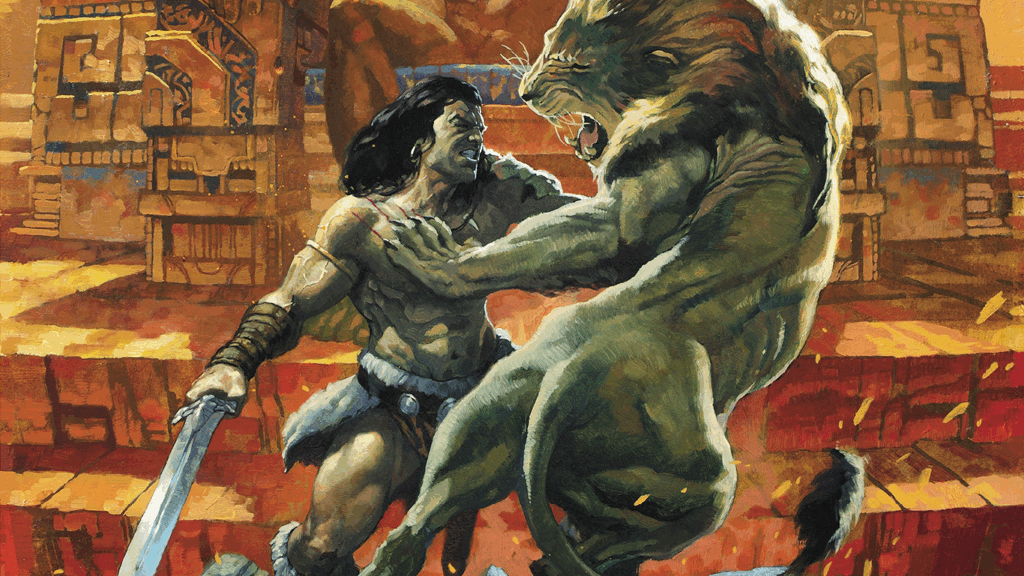
For readers who want to go straight to the source, Robert E. Howard’s “The Tower of the Elephant” is the place. It’s a single short story depicting a young Conan, driven by nothing nobler than greed and curiosity, who breaks into a sorcerer’s tower and stumbles into something ancient and strange. The plot twist at its center is genuinely surprising, even ninety years later.
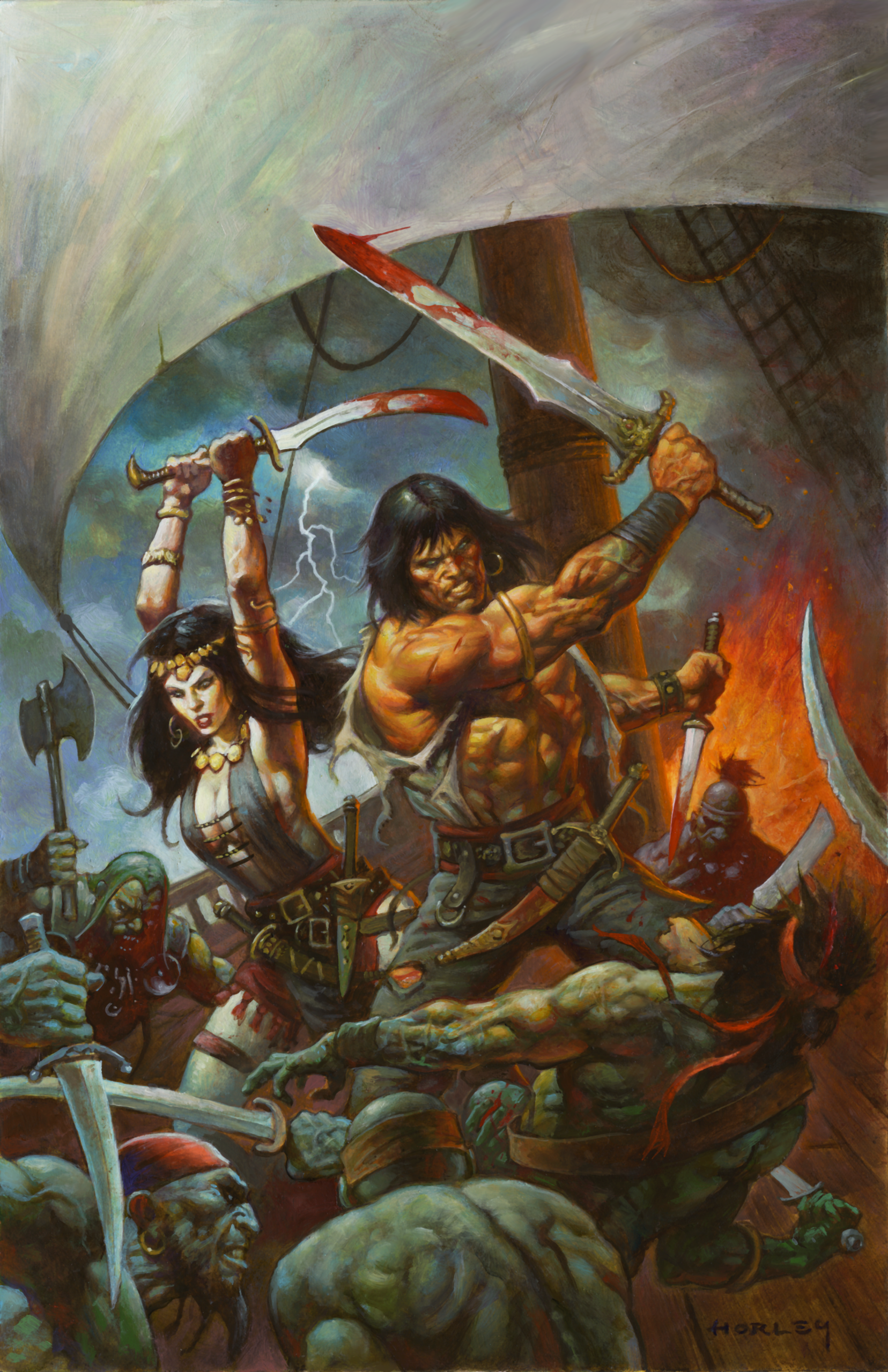
From there, “Queen of the Black Coast” shows Howard’s range: a love story between Conan and the pirate queen Bêlit that’s more emotionally complex than anything the genre’s reputation would suggest.
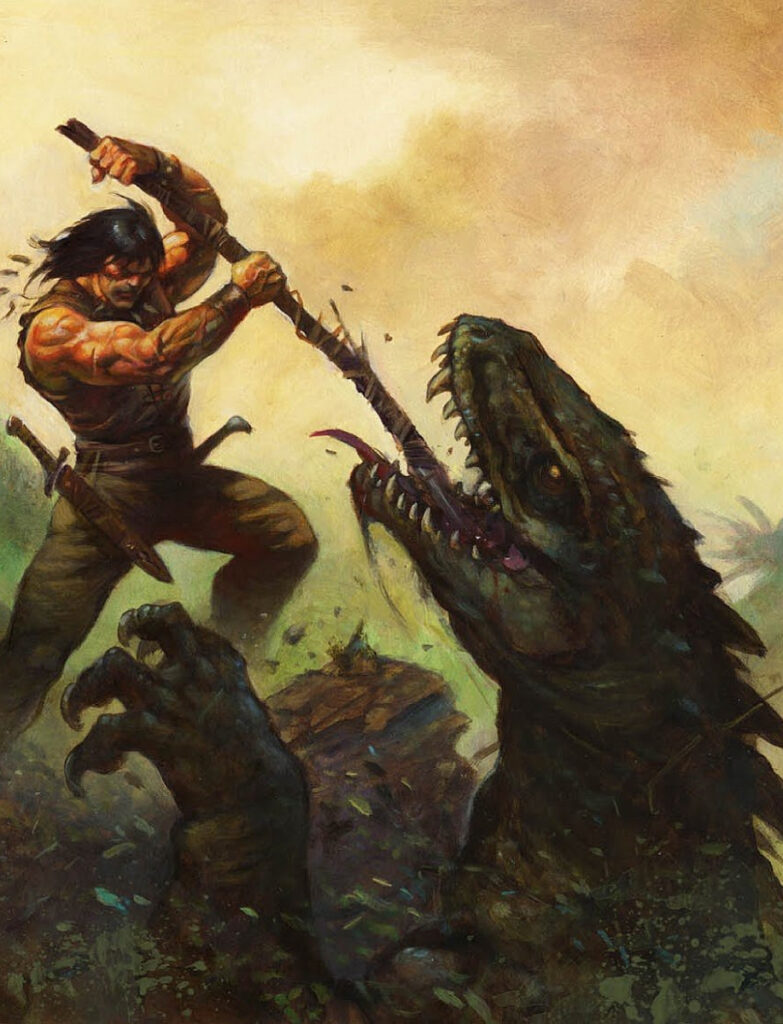
And “Red Nails,” the last complete Conan novella Howard wrote, is the genre at its most concentrated: dark, claustrophobic, and relentless.
For readers who’d rather start with the modern descendants and work backward, Andrzej Sapkowski’s The Last Wish is the first Witcher collection and pure episodic sword and sorcery. After reading it, going back to Howard feels like archaeology in the best way.
Joe Abercrombie’s The Blade Itself is the other door, showcasing sword and sorcery’s moral instincts grafted onto epic fantasy’s scale, with Logen Ninefingers carrying Conan’s bloodline on every page.
For comics readers, the current Titan Comics run, beginning with Conan the Barbarian: Bound in Black Stone, is a clean starting point that doesn’t ask you to know anything going in.
However you get there, the genre is waiting, just like it has been since 1932.

Lo Terry
In his effort to help Heroic Signatures tell legendary stories, Lo Terry does a lot. Sometimes, that means spearheading an innovative, AI-driven tavern adventure. In others it means writing words in the voice of a mischievous merchant for people to chuckle at. It's a fun time.