



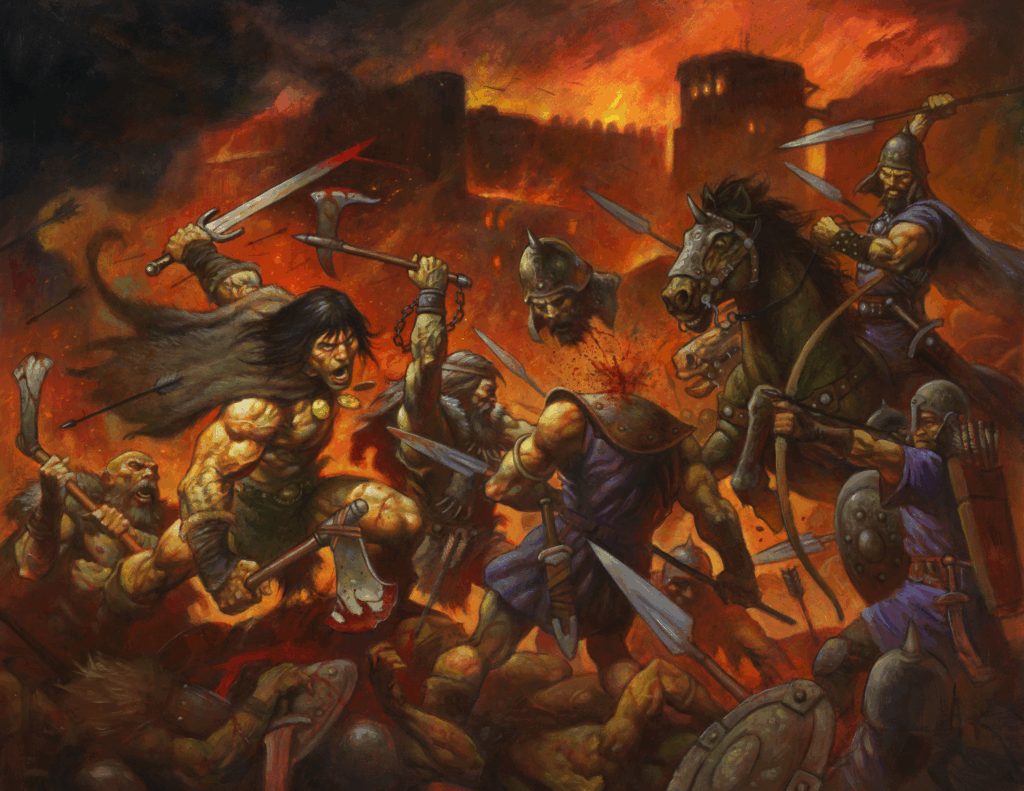
“He saw only a flight of silver steps leading down, dimly lighted by what means he could not ascertain.”
That line reads like flavor text from a loading screen. You can picture it: a narrow staircase descending into something you already know you shouldn’t enter, lit by a source the game never explains. Sen’s Fortress. The Grand Archives. The cavernous, twilight shores of Ash Lake.
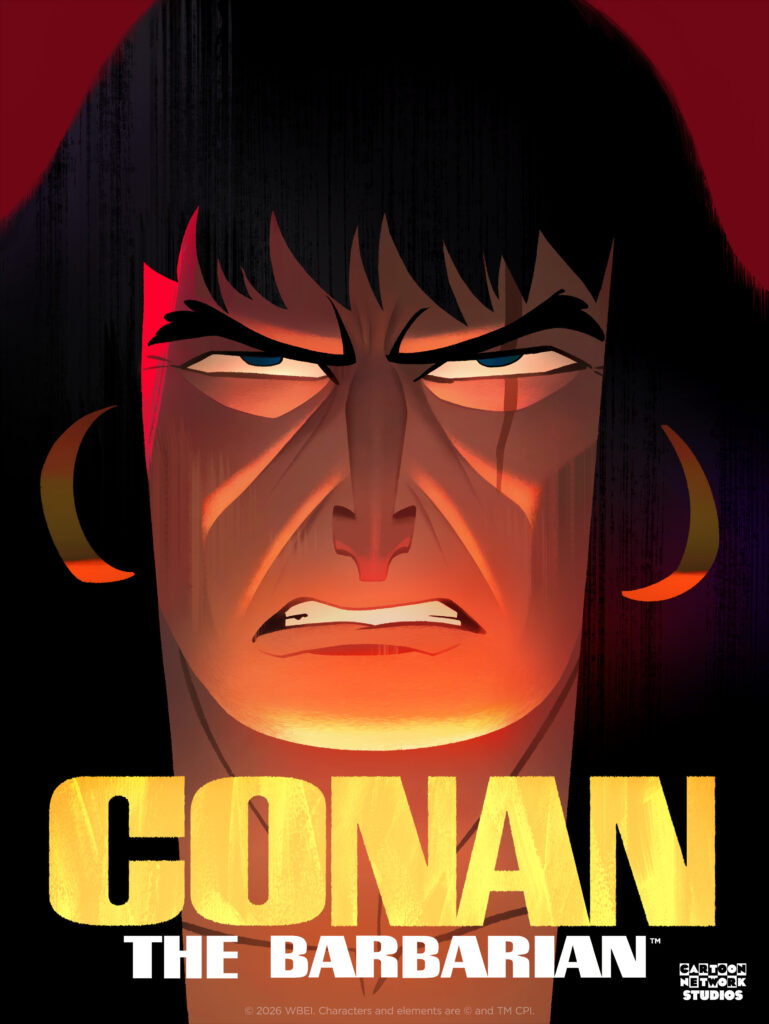
It was published in 1933. The writer was Robert E. Howard, working out of a small town in central Texas. The story was called “The Tower of the Elephant,” and it ran in Weird Tales magazine for pennies a word featuring the character Conan the Barbarian.
But wonder not: if you’ve put serious hours into anything FromSoftware has built, the connection between Conan the Barbarian and Dark Souls is nothing but pure ancestry.
Conan the Barbarian is a Much More Complex Character than a Brute
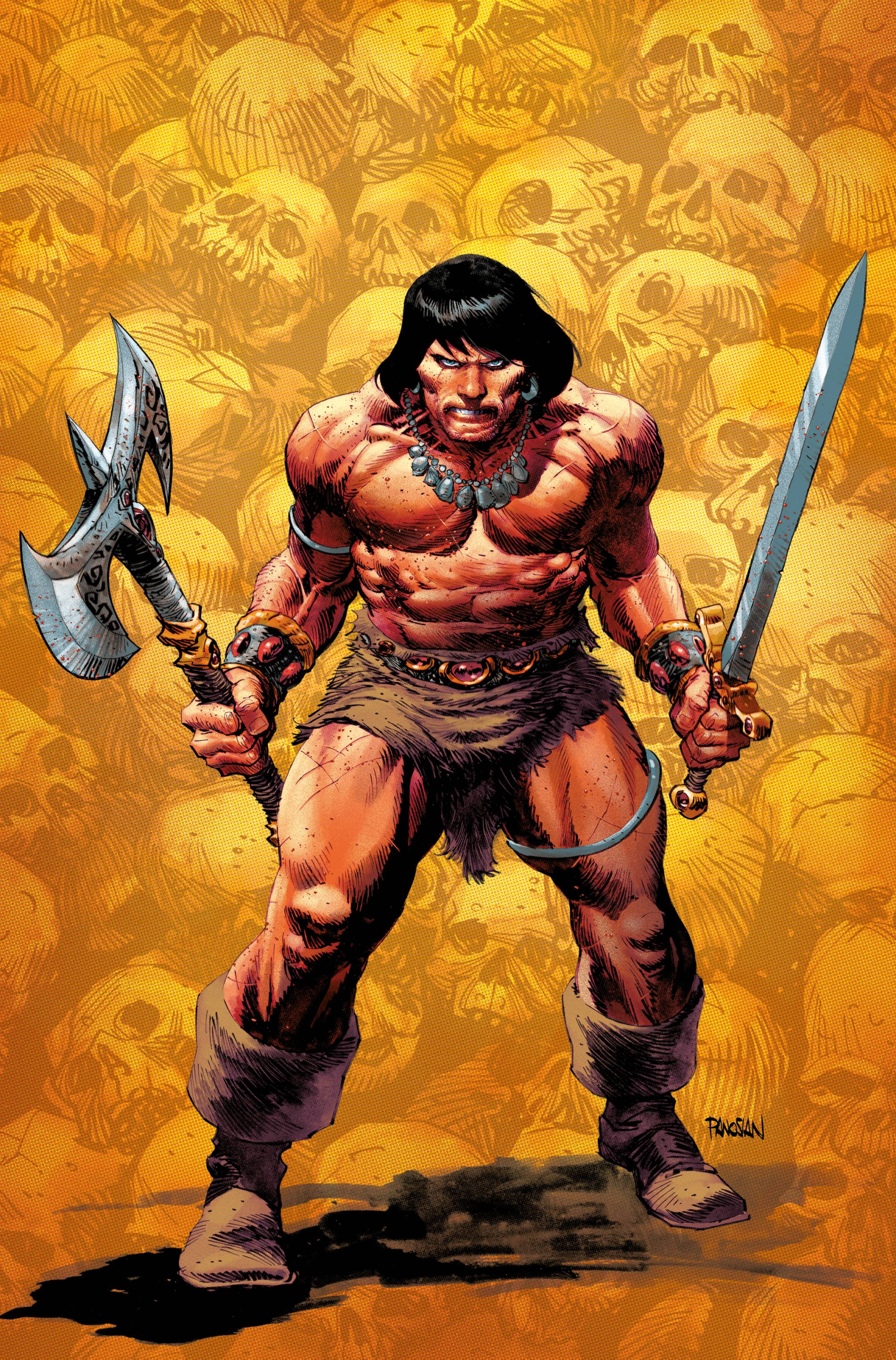
Howard created Conan the Cimmerian. And that’s the problem, because now you’re picturing Arnold Schwarzenegger oiled up and grunting monosyllabic revenge dialogue from the 1982 movie. The Arnold version is a musclebound gladiator defined by a dead-parents backstory and a grinding wheel. He speaks in broken English. He squints at magic like a dog hearing a whistle.
The actual literary Conan has almost nothing to do with that character.
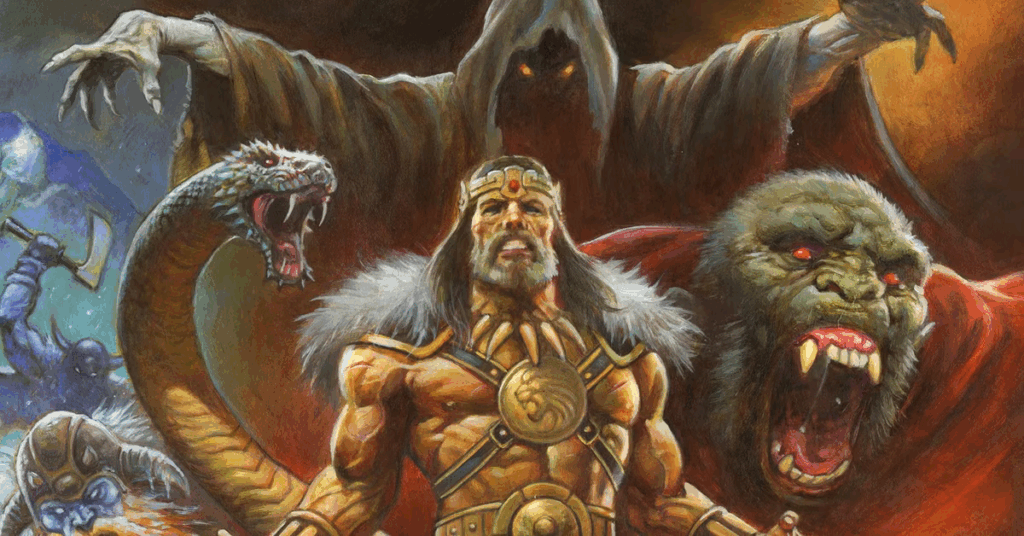
In his very first published appearance in a story called “The Phoenix on the Sword”, Conan is a king. He’s sitting at a desk, personally correcting the cartography of his kingdom because the existing maps are, in his judgment, “vague and faulty.” He speaks dozens of languages. He understands magic because he’s seen firsthand what cosmic forces do to the humans arrogant enough to wield them.

The gap between the movie version and Howard’s actual character is the single biggest reason people who would love this writing never pick it up. They think they already know what it is.
Howard gave Conan a philosophy, too. In “Queen of the Black Coast,” the character lays it out: “I have known many gods. He who denies them is as blind as he who trusts them too deeply… I live, I burn with life, I love, I slay, and am content.”
That’s the rejection of divine providence in favor of raw, stubborn survival. The gods exist, they’re dangerous, and none of them are coming to help. Does this not sound like the operating theology of a FromSoft protagonist?
Every Element of Dark Souls that You Love Was Lifted in Some Way from Howard’s Violent Hyborian Age
Every design element that makes a game from FromSoft feel different from the rest of fantasy finds their anchor in the imagination of Robert E. Howard’s Hyborian Age.
The Ringed City, Shulva, Eleum Loyce–you know the feeling of entering one of these places. The civilization that built it is gone. The people still inside have forgotten the outside world exists. The architecture has outlived its purpose and become a cage. Well, in Howard’s final Conan story, “Red Nails,” the city of Xuchotl works on exactly this principle. It is a massive structure sealed under an emerald dome, carved from jade and lapis lazuli, where two factions have spent decades hunting each other through corridors built by ancestors they can no longer comprehend. Howard wrote to his contemporaries that fictional decadence needed to be treated with enough realism that “the abnormal becomes normal.”
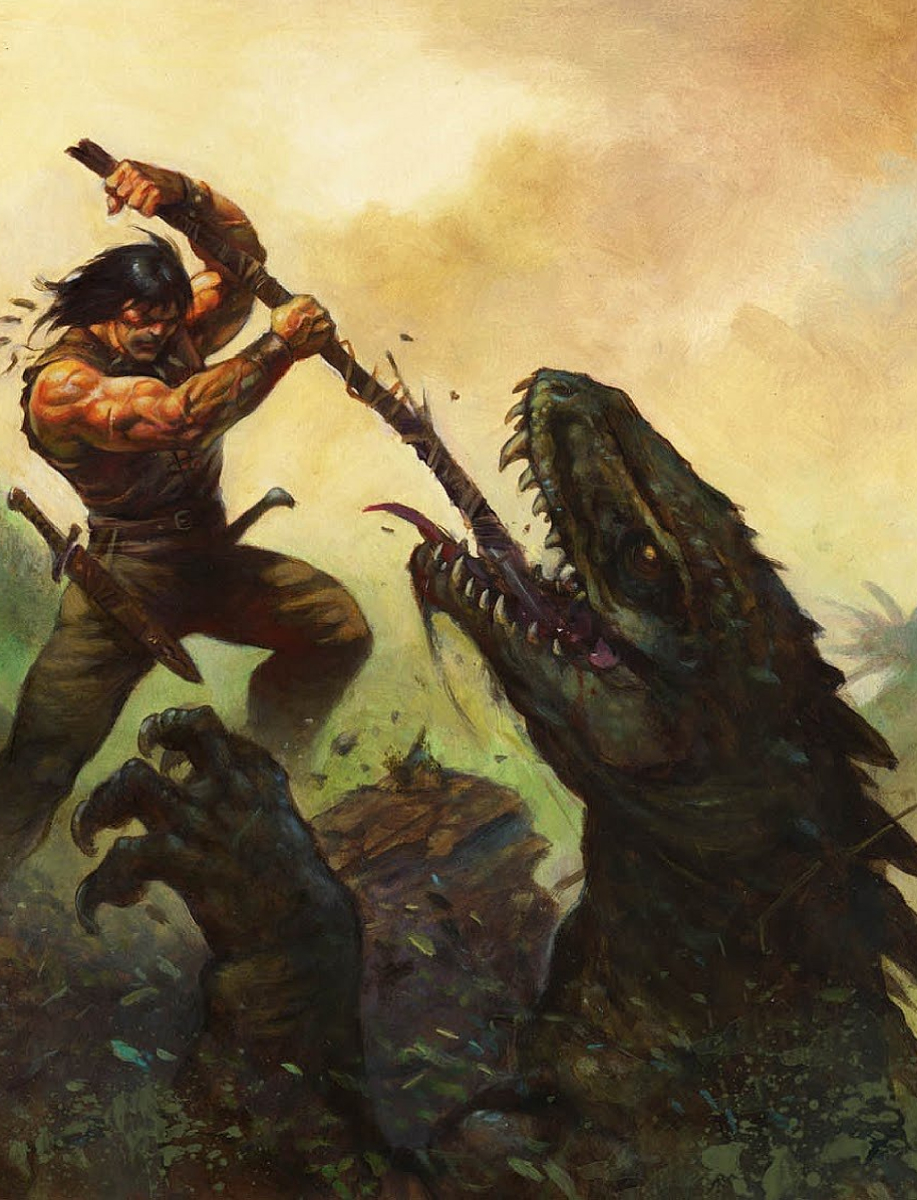
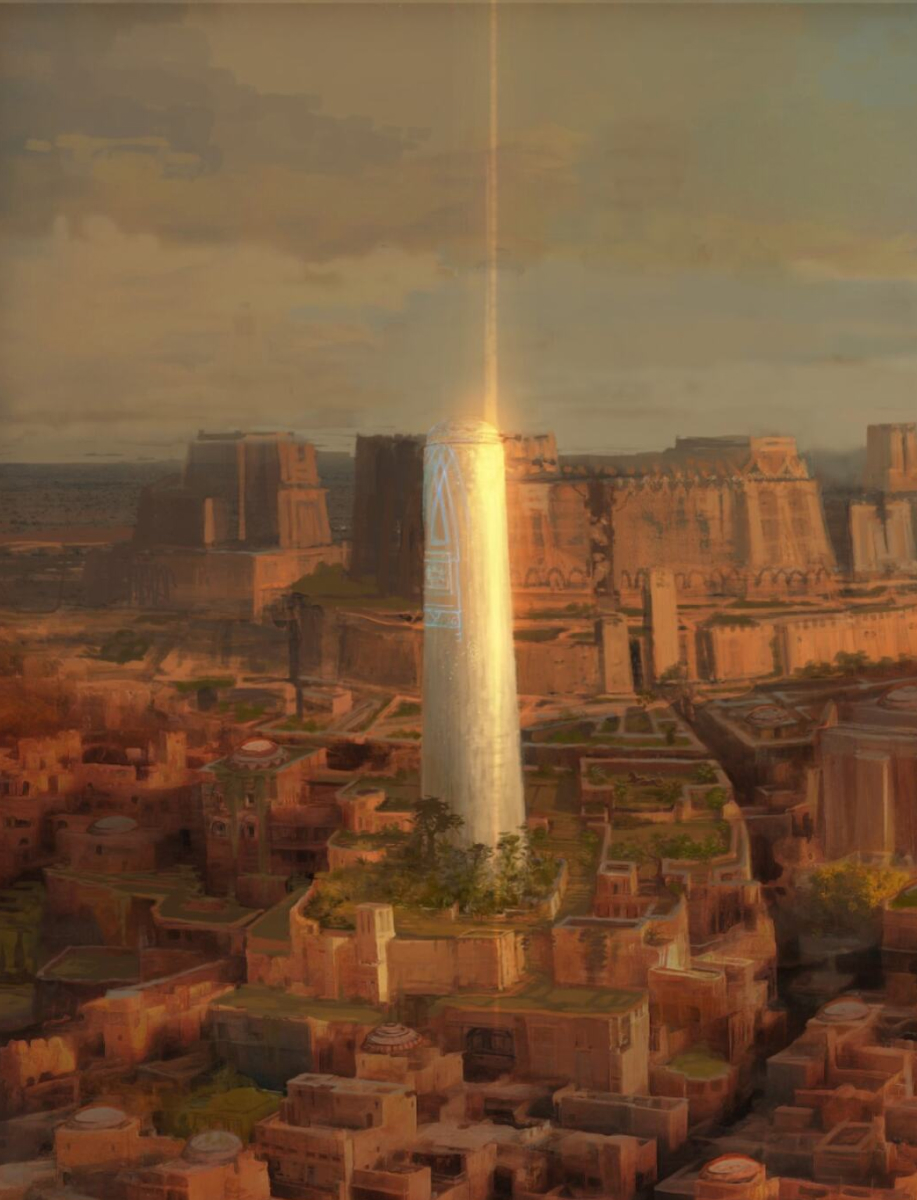
Or perhaps you’ve read item descriptions on a rusted sword to piece together what happened to a dead kingdom. You do this because, as any gamer knows, you best learn the rules of a world by walking through it. That method of storytelling, of centering worldbuilding through movement and physical contact, is how Howard wrote fiction in 1933. The classic title “The Tower of the Elephant” opens in a tavern. A slaver mouths off to a barbarian. The barbarian kills him. In a single page, Howard establishes the danger of this world and what kind of person survives in it. When the protagonist infiltrates the tower later, everything the reader learns about the sorcerer Yara comes from what’s physically there as the protagonist discovers it: treacherous gardens, blood-stones, lapis lazuli floors. No lore dump. No prologue. You learn the world by moving through it.
Perhaps one of the most daunting factors of a game like Dark Souls is the quick revelation that whatever it is that controls the world doesn’t about you. That specific flavor of dread can be traced back to writers like H.P. Lovecraft, with whom Howard maintained a close friendship and colleagueship. Through the over 900 pages of letters they exchanged, Howard absorbed Lovecraft’s sense of cosmic scale and put it to work in adventure fiction. An example of this can be seen again at the top of that same tower in “The Tower of the Elephant,” where the real secret is revealed: Yag-kosha, an elephant-headed being from another planet, tortured by a human sorcerer for years. Far from a villain, he’s just something older than the human concept of villainy, and the story is stickier because the indifference is harder to metabolize than if he was maleficent.
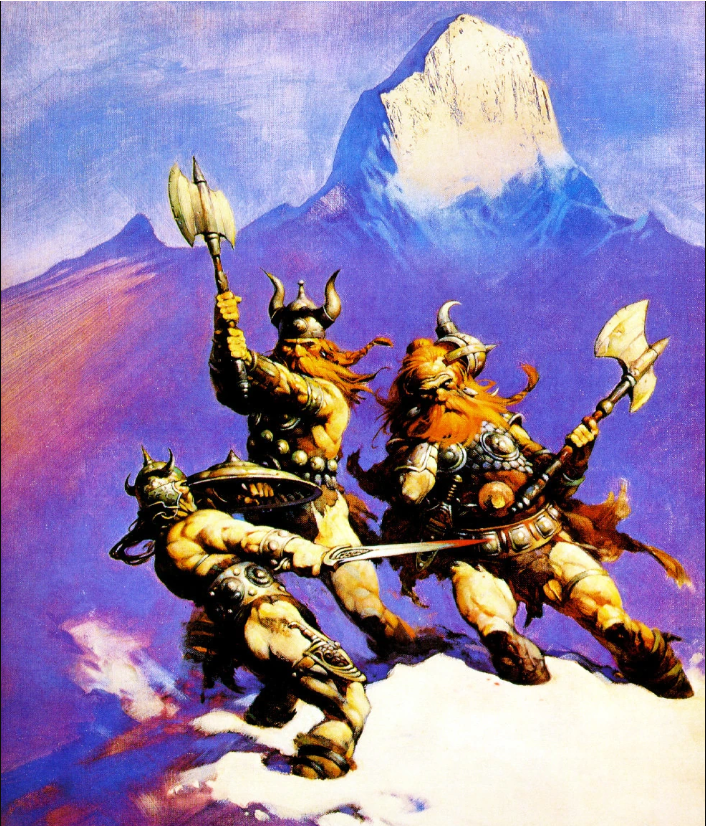
But, of course, what really ties these two worlds together is the sheer unflinchingness of the violence that the world itself inflicts upon the protagonists. Every Dark Souls player knows the dread that arises from fat-rolling through the Frigid Outskirts with only a sliver of health to sustain you. Howard wrote of that same sensation in “The Frost-Giant’s Daughter”, where a warrior staggers across frozen tundra after a battlefield massacre, chasing a spectral woman who stays just out of reach. He writes every yard: mailed feet punching through frozen crust, lungs burning, the whole body reduced to a machine running on stubbornness. When frost-giants arrive, the fight brings him to his knees and the snow goes red. In Howard’s world, just as in Dark Souls, combat is simply costly.
Now, of course, all of this could be coincidence. After all, it’s not like Robert E. Howard had a monopoly ont he idea of an unforgiving harsh world that constantly tests its characters. But…
Miyazaki Literally Admitted that Conan the Barbarian Influenced Him in Creating Dark Souls
When asked what most influenced him to create the dark fantasy setting of Dark Souls, Hidetaka Miyazaki cited a lot of different sources as formative influences on his design philosophy: Western fantasy gamebooks by Steve Jackson and Ian Livingstone; the tabletop aesthetics of Wizardry; the films Conan the Barbarian and Excalibur; and the art of Frank Frazetta. Specifically, in the Dark Souls Design Works interview, Miyazaki confirmed that the Catarina armor was chosen because it resembled the armor of Bazuso from Berserk.
That last detail makes the full chain visible if you walk it forward.
Howard invented the sword-and-sorcery genre in the 1930s with the release of his character Conan the Barbarian. This genre was characterized by decaying empires, cosmic indifference, protagonist who runs on willpower instead of prophecy. In the 1960s, Michael Moorcock built his Elric saga as a direct response to Howard’s genre, but inverted the protagonist’s archetype while keeping the ruined-world atmosphere. He then introduced the Law-versus-Chaos cosmic framework that his critical work Wizardry and Wild Romance traces explicitly back to Howard’s influence. Then, in the 1980s, Kentaro Miura fed all of those sources into Berserk, which gave the grimdark aesthetic its definitive visual language. And, finally, Miyazaki cited Berserk as well as Conan the Barbarian by name in what gave him the design language to make Dark Souls. Four generations of artists, each building on the last, each citing their predecessors on the record.
The literary critic Steve Tompkins captured why this lineage matters (and why it produces something so different from mainstream fantasy) in his essay “The Shortest Distance Between Two Towers.” Tolkien and Howard both sit at the foundation of modern fantasy, but Tolkien assumed the world was worth saving. Defeat the dark lord, restore the kingdom, and grace returns. Howard assumed the kingdom was already gone. The world in his fiction has already collapsed, the gods have already failed or stopped caring, and the only victory available is grinding through another day.
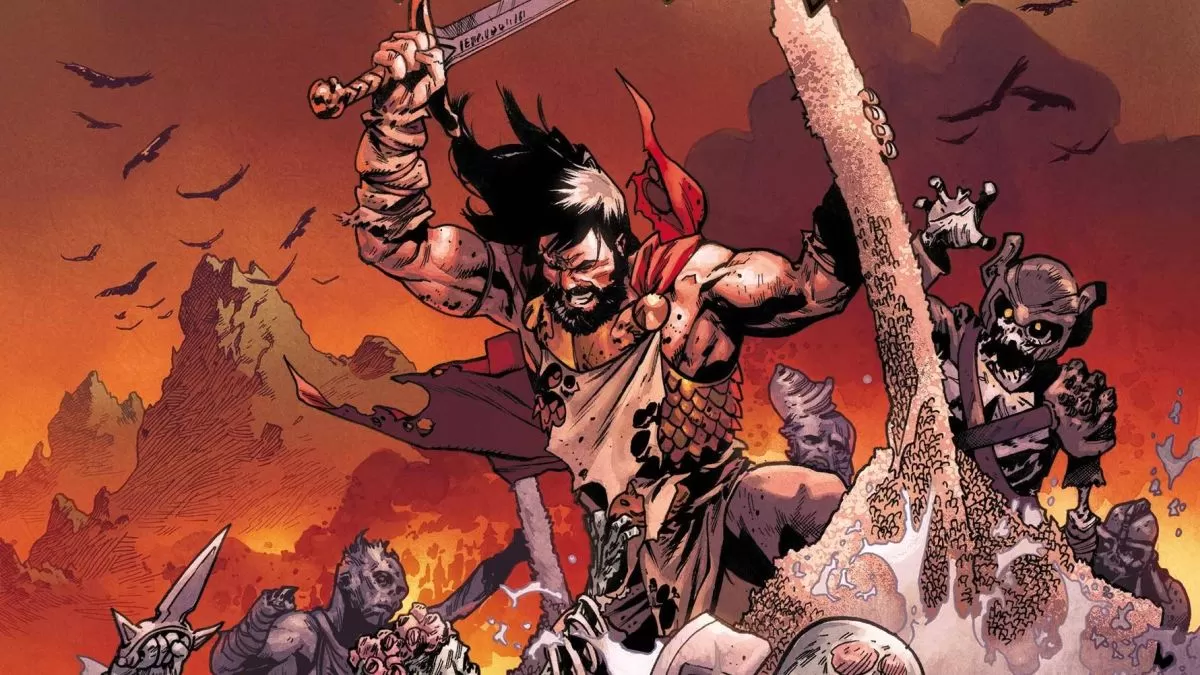
“What does this have to do with Dark Souls?” Well, FromSoft built every one of the Dark Souls games on that second assumption.
Go Read One Conan the Barbarian Story Before You Play Dark Souls Next
Howard wrote for pulp magazines at pennies a word. His stories run twenty to forty pages. They drop you into a situation already moving, give you exactly enough environmental detail to understand the stakes, and end the moment the action stops. You can finish one in the time it takes to clear a dungeon.
So before you sit down to play Dark Souls next, if there’s one story you should read to feed your mind, read “The Tower of the Elephant.” In it, a young thief infiltrates a vertical, heavily guarded tower in a city full of killers, and what he finds at the top rewrites everything he understood about the world he’s living in. It’s the closest thing to a Sen’s Fortress run that exists on paper.
If that one hits, then go for “Red Nails” next. In that story, two mercenaries trapped inside a sealed mega-structure carved from jade, where two factions have spent decades going insane and killing each other in corridors built by people who’ve been dead so long nobody remembers what the building was for.
Then, if you’re still feeling froggy, read “The Frost-Giant’s Daughter”. In that story, an exhausted warrior chases a spectral woman across a frozen wasteland on legs that are barely holding him up. By the end, you’d be hard pressed not to recognize the Frigid Outskirts in every sentence.
Howard wrote all of this in the 1930s, out of a small town in central Texas. The fact that game designers on the other side of the planet are still building inside his aesthetic a century later says something good about the work. If you love Dark Souls does, the original Conan the Barbarian fiction is worth your time.

Lo Terry
In his effort to help Heroic Signatures tell legendary stories, Lo Terry does a lot. Sometimes, that means spearheading an innovative, AI-driven tavern adventure. In others it means writing words in the voice of a mischievous merchant for people to chuckle at. It's a fun time.